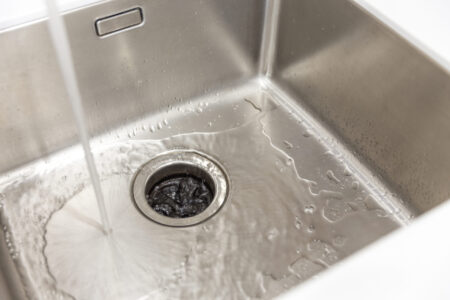
A garbage disposal makes kitchen cleanup easier, but it is not designed to handle every type of food waste. Grease, fibrous scraps, oversized portions, and non-food objects can contribute to garbage disposal odors, clogs, jams, and premature wear.
Fortunately, most garbage disposal care comes down to a few simple habits: use cold water, feed food waste gradually, clean the splash guard, and pay attention when the unit begins sounding or draining differently.
These garbage disposal cleaning tips can help Oregon homeowners keep their kitchen sinks fresh, reduce unnecessary strain on the disposal, and recognize when a problem requires professional attention.
For a broader household maintenance checklist, review these tips for maintaining your home plumbing system.
How a Garbage Disposal Works
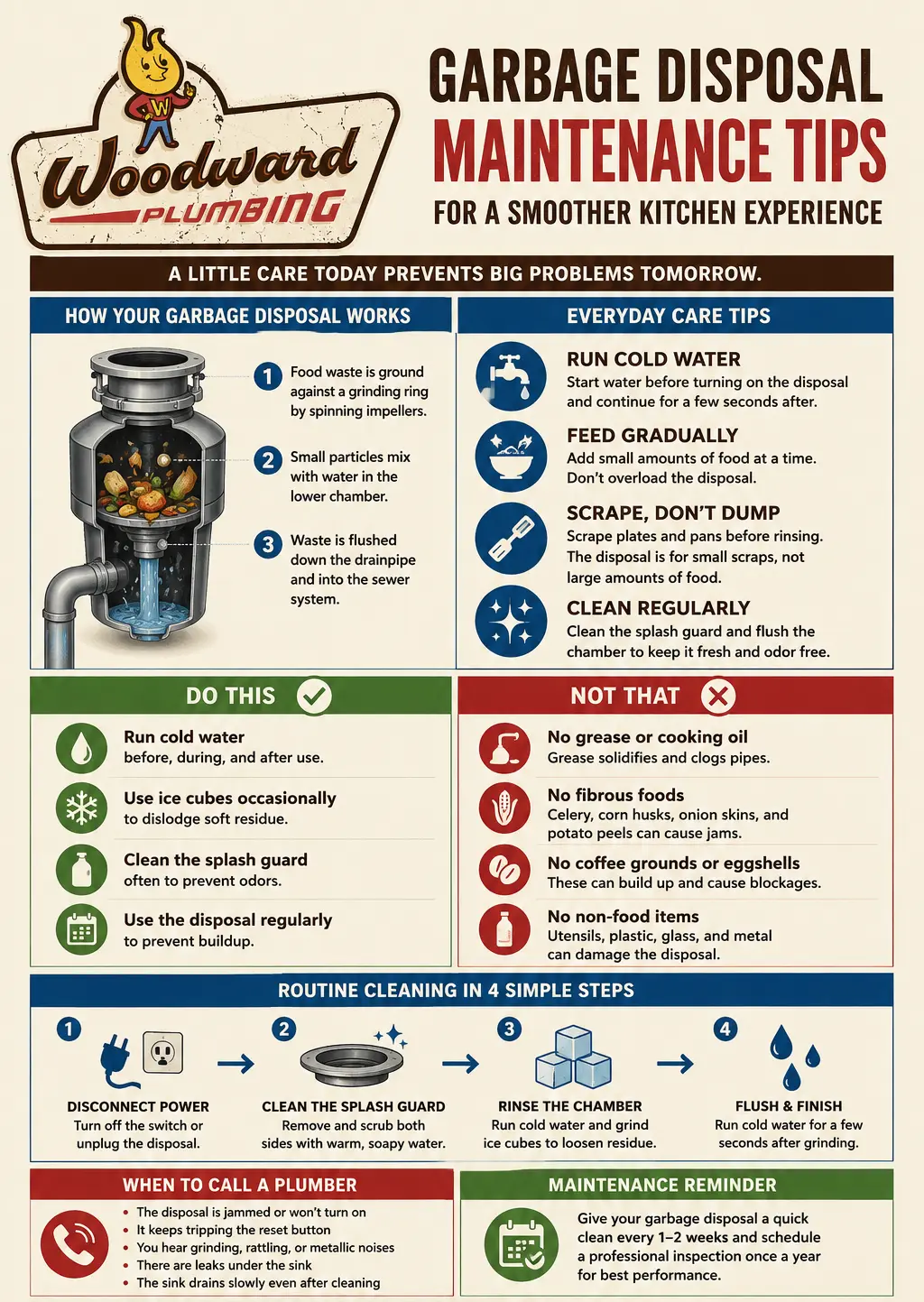
A garbage disposal is mounted beneath the kitchen sink and connected to the sink drain. When the unit is running, a spinning plate and small impellers push food waste against a stationary grinding ring. The resulting particles are flushed through the discharge opening and into the drainpipe.
Despite the common phrase “garbage disposal blades,” most residential disposals do not use sharp, knife-like blades. This distinction matters because ice does not sharpen the unit. Ice may help knock loose soft residue inside the grinding chamber, but it cannot repair worn, damaged, or jammed components.
The disposal also contains an overload protector. This safety feature shuts the motor down when the unit becomes overheated, overloaded, or jammed. On many models, the reset button is located on the bottom of the disposal beneath the sink.
Operating procedures vary by manufacturer and model. Homeowners should follow the appliance manual, but the general process is to start a steady stream of cool water, turn on the disposal, add small amounts of suitable food waste, and continue running water briefly after grinding stops. Additional instructions are available in this manufacturer guide to operating a garbage disposal.
How to Clean a Garbage Disposal Safely
Garbage disposal cleaning does not need to involve aggressive chemicals or complicated tools. The most important step is preventing the disposal from turning on while you clean accessible surfaces.
1. Disconnect the Power
Turn the disposal off at the wall switch. For more thorough cleaning, unplug the unit beneath the sink or switch off the appropriate circuit breaker. Do not assume the wall switch provides enough protection when your hands or cleaning tools will be near the disposal opening.
Never place your hand inside the grinding chamber. Should you see a loose object, leave the power disconnected and use long-handled pliers or tongs to retrieve it. A plumber should handle objects that cannot be removed safely or easily.
2. Clean the Splash Guard
The rubber splash guard is one of the most common sources of garbage disposal odors. Food residue can collect along its underside even when the visible portion appears clean.
With the power disconnected, lift each section of the splash guard and scrub both sides with warm water, dish soap, and a small cleaning brush. Wipe around the sink opening before restoring power.
3. Rinse the Grinding Chamber
Restore power after your hands and cleaning materials are away from the opening. Run cool water, turn on the disposal, and allow the water to flush the chamber.
A small amount of ice can be processed to help dislodge soft residue. Feed the cubes gradually rather than filling the disposal all at once. Ice should not be treated as a repair for a jammed, damaged, or poorly grinding unit.
4. Address Lingering Odors
Persistent odors often come from the splash guard, food trapped in the grinding chamber, or buildup farther into the drain line. Start by cleaning the splash guard and flushing the unit with cool water.
A small amount of mild dish soap can help remove greasy residue. Avoid pouring bleach, caustic drain cleaner, or large quantities of homemade cleaning mixtures into the disposal. Products that create heat, foam aggressively, or react with other cleaners may damage components or create a safety concern.
Odors that return quickly may indicate a drainage issue rather than a dirty disposal. Other warning signs can include slow drainage, bubbling, or noises from nearby fixtures. Learn what it can mean when a toilet or plumbing fixture begins gurgling.
Run Cold Water in the Garbage Disposal
Cold water is one of the simplest and most effective garbage disposal care practices. Start the water shortly before turning on the disposal and leave it running for several seconds after the grinding sound stops.
The water helps carry ground particles out of the disposal and through the drainpipe. Cold water also helps keep residual fats more solid while they move through the unit. Hot water can soften fats and allow them to coat the disposal or drain line.
This does not mean grease is safe to place in the sink when cold water is running. Cooking oil, butter, meat drippings, shortening, and other fats belong in a sealed container or appropriate waste receptacle.
Fats, oils, and grease can collect inside pipes and contribute to blockages in household and municipal sewer systems. The EPA provides additional information about how fats, oils, and grease affect sewer infrastructure.
What Not to Put in a Garbage Disposal
A disposal is intended for small amounts of suitable food residue left after plates and cookware have been scraped. It should not be used as a substitute for a trash can or compost container.
Items that are more likely to cause garbage disposal clogs, jams, or drainage problems include:
- Cooking grease and oil: Fats can coat the disposal and solidify inside the drainpipe.
- Fibrous vegetables: Celery, corn husks, asparagus, artichoke leaves, and similar scraps can wrap around moving components.
- Large quantities of potato peels: Starchy peels can form a thick paste that restricts drainage.
- Coffee grounds: Grounds can settle in pipes and combine with grease or other debris.
- Eggshells: Shell fragments and membrane material can add to buildup instead of cleaning the disposal.
- Pasta and rice: These foods absorb water and may continue expanding inside the drain.
- Large bones and hard pits: Hard objects may jam the unit or damage internal components.
- Seafood shells: Thick shells are difficult to grind and may become lodged in the disposal.
- Non-food objects: Utensils, bottle caps, glass, plastic, foil, paper, and jewelry should never enter the disposal.
- Paint, solvents, medication, or household chemicals: These products should be discarded according to local disposal instructions.
Homes with septic systems require additional care because disposal waste increases the amount of solid material entering the tank. The EPA recommends limiting garbage disposal use in homes served by septic systems and keeping grease, coffee grounds, and harmful chemicals out of household drains. Homeowners can review the agency’s septic system care recommendations.
Garbage Disposal Tips for Everyday Use
Scrape Plates Before Rinsing
Remove bones, peels, grease, and large food scraps before placing dishes in the sink. The disposal should process small remnants, not entire portions of unwanted food.
Feed Food Gradually
Turn on the cold water and disposal before adding food. Feed small portions into the unit and allow each portion to clear before adding more. Overloading the grinding chamber can slow the motor and increase the likelihood of a jam.
Keep Water Running Afterward
Allow cold water to continue flowing briefly after the grinding sound returns to normal. This helps move remaining particles through the disposal’s discharge pipe.
Run the Disposal Regularly
A disposal in a guest kitchen, bar sink, or infrequently used home should still be operated periodically. Regular use can help prevent residue from drying inside the grinding chamber and may reveal developing problems before the unit is needed for a large cleanup.
Keep Utensils Away From the Opening
Do not leave silverware, measuring spoons, bottle caps, or other small objects near the drain opening. Check the chamber with a flashlight when an item unexpectedly disappears from the sink.
Avoid Chemical Drain Cleaners
A chemical cleaner may not reach the actual source of a garbage disposal clog. It can also remain trapped in standing water, creating an exposure risk for anyone who later opens the plumbing.
Recurring kitchen clogs may require a mechanical cleaning method. This overview of hydrojet drain cleaning in Oregon explains how professional drain cleaning differs from temporary chemical treatments.
Garbage Disposal Troubleshooting
Some disposal problems have a simple explanation, while others require inspection. Before troubleshooting, turn the wall switch off and keep your hands out of the grinding chamber.
The Garbage Disposal Does Not Turn On
Check whether the unit is plugged in and whether the circuit breaker or nearby GFCI outlet has tripped. The overload protector may also have shut down the unit.
Allow an overheated disposal to cool before pressing its reset button. The switch should remain off during this process. Manufacturer instructions for locating and using an overload protector are available in this garbage disposal reset guide.
Repeatedly resetting the disposal does not correct the underlying problem. A unit that continues tripping may be jammed, overloaded, electrically damaged, or nearing the end of its service life.
The Disposal Hums but Does Not Grind
A humming sound usually means the motor is receiving power but the grinding plate cannot rotate. Turn the disposal off immediately to reduce the risk of overheating the motor.
Do not continue flipping the switch or reach inside the unit. Disconnect power and schedule service when the obstruction cannot be safely identified and removed with an appropriate tool.
The Disposal Runs but the Sink Drains Slowly
Slow drainage can indicate buildup in the disposal outlet, P-trap, or branch drain. The problem may be beyond the disposal even when water eventually drains.
Professional drain cleaning and repair in Albany can identify whether the restriction is inside the disposal connection or farther into the kitchen drain line.
The Disposal Makes a Metallic or Rattling Sound
Turn the unit off as soon as you hear unexpected metal-on-metal contact, rattling, or grinding. A utensil, screw, bottle cap, or broken internal component may be moving inside the chamber.
Continuing to operate the unit can worsen the damage. Disconnect the power and use a flashlight to inspect the chamber without placing your hand inside.
The Garbage Disposal Is Leaking
Water may leak from the sink flange, dishwasher connection, discharge pipe, or bottom of the disposal. The location of the moisture helps determine whether the issue involves a loose connection, deteriorated seal, cracked housing, or internal failure.
Leaks from the bottom of the unit frequently indicate an internal problem. Replacing an accessible seal or connection may solve some leaks, but a corroded or cracked disposal often requires replacement.
Moisture beneath the sink should be addressed promptly to protect the cabinet and nearby flooring. Broader drainage symptoms may also warrant reviewing the common signs of sewer line problems in Salem homes.
How Often Should You Clean a Garbage Disposal?
The ideal cleaning schedule depends on how frequently the disposal is used and what enters it. A busy household may need to clean the splash guard and flush the chamber every one or two weeks. An infrequently used disposal may only need monthly attention.
Do not wait for a strong odor before cleaning the unit. A simple routine is easier than removing compacted residue after it has collected beneath the splash guard or around the drain opening.
- Clean visible sink and splash-guard residue as part of regular kitchen cleaning.
- Flush the disposal with cold water after every use.
- Inspect beneath the sink periodically for moisture, corrosion, or loose connections.
- Pay attention to changes in sound, vibration, grinding speed, and drainage.
- Arrange an inspection when odors, clogs, leaks, or reset problems repeatedly return.
Preventive attention should extend to other plumbing appliances as well. These tankless water heater FAQs cover another system that benefits from correct operation and routine maintenance.
When to Call a Plumber
Basic garbage disposal cleaning can be completed safely by many homeowners. Repairs involving electrical connections, concealed drain blockages, leaks from the disposal body, or internal mechanical components should be left to a qualified professional.
Consider scheduling plumbing service when:
- The disposal hums but will not rotate.
- The reset button repeatedly trips.
- The unit does not receive power after basic electrical checks.
- Water leaks from the bottom of the disposal.
- The kitchen sink remains slow after the disposal has been flushed.
- Odors return immediately after the splash guard and chamber are cleaned.
- The disposal vibrates, rattles, or makes metallic sounds.
- Food waste is no longer being ground effectively.
- A foreign object cannot be removed without reaching into the unit.
- Multiple fixtures are draining slowly or making unusual sounds.
For difficult kitchen drain obstructions, professional drain cleaning service can address buildup that extends beyond the garbage disposal itself.
Frequently Asked Questions About Garbage Disposal Cleaning
Can I pour boiling water into a garbage disposal?
Hot water can pass through the sink when the disposal is not grinding food, but cool water is the better choice while the unit is operating. Cool water helps carry food particles through the disposal without softening residual fats that may coat the drainpipe.
Do ice cubes sharpen garbage disposal blades?
No. Most garbage disposals use impellers and a stationary grinding ring rather than sharp blades. Small amounts of ice may help dislodge soft residue, but ice cannot sharpen, repair, or unjam worn components.
Can I use lemon peels to clean a garbage disposal?
A very small piece of citrus peel may temporarily improve the smell, but peels do not remove a drain clog or replace proper cleaning. Thick or fibrous pieces can be difficult for some units to process. Clean the splash guard and grinding chamber instead of relying on citrus to conceal an odor.
Why does my garbage disposal smell even after cleaning?
Odors may remain when residue is trapped beneath the splash guard, inside the disposal outlet, in the P-trap, or farther down the drain line. A dry or poorly vented drain may also produce odors. Recurring smells should be investigated rather than repeatedly covered with fragrances.
What should I do when my garbage disposal is jammed?
Turn the disposal off immediately and disconnect its power. Never place your hand inside the unit. A visible object may be removed with long-handled pliers or tongs after power is disconnected, but a stubborn jam should be handled by a plumber.
Why does my garbage disposal keep tripping the reset button?
The motor may be overheating because the unit is jammed, overloaded, or mechanically damaged. Allowing the disposal to cool and pressing the reset button may restore operation once. Repeated trips indicate a problem that requires diagnosis.
Can a garbage disposal clog the main sewer line?
A disposal usually contributes food waste to the kitchen branch drain first. Over time, grease, starches, grounds, and other solids can combine with existing buildup. Homes experiencing recurring clogs in multiple fixtures may have a larger drain or sewer issue.
Does homeowners insurance cover garbage disposal damage?
Coverage depends on the cause of the damage and the terms of the policy. Ordinary wear, maintenance issues, and appliance failure are commonly treated differently from sudden covered water damage. This guide explains more about homeowners insurance and plumbing problems.
Keep Your Kitchen Disposal Working Smoothly
Good garbage disposal care begins with using the unit correctly. Run cold water, feed scraps gradually, keep grease and fibrous foods out of the drain, and clean the splash guard before residue becomes difficult to remove.
A disposal that repeatedly jams, leaks, drains slowly, or trips its reset button likely needs more than routine cleaning. Woodward Plumbing can inspect the disposal and connected kitchen drain, identify the source of the problem, and explain whether repair, drain cleaning, or replacement is appropriate.