A toilet should flush, refill, and become quiet. When you hear bubbling, gulping, or a gurgling sound from the toilet, something is interfering with the normal movement of water and air through your plumbing system.
In many cases, toilet gurgling is caused by a partial clog, a blocked plumbing vent, or a developing sewer line blockage. The sound may begin after flushing the toilet, when another fixture drains, or seemingly at random. It may affect one toilet or several plumbing fixtures throughout the home.
A gurgling toilet does not always mean you have an immediate plumbing emergency, but it should not be ignored. The sound is often an early warning that drainage is restricted. Addressing the problem while water is still moving can help prevent an overflowing toilet, sewage backup, or damage around lower-level drains.
This guide explains why toilets gurgle, how to narrow down the cause, which troubleshooting steps are safe, and when professional drain cleaning or sewer inspection may be needed.
What Does Toilet Gurgling Mean?
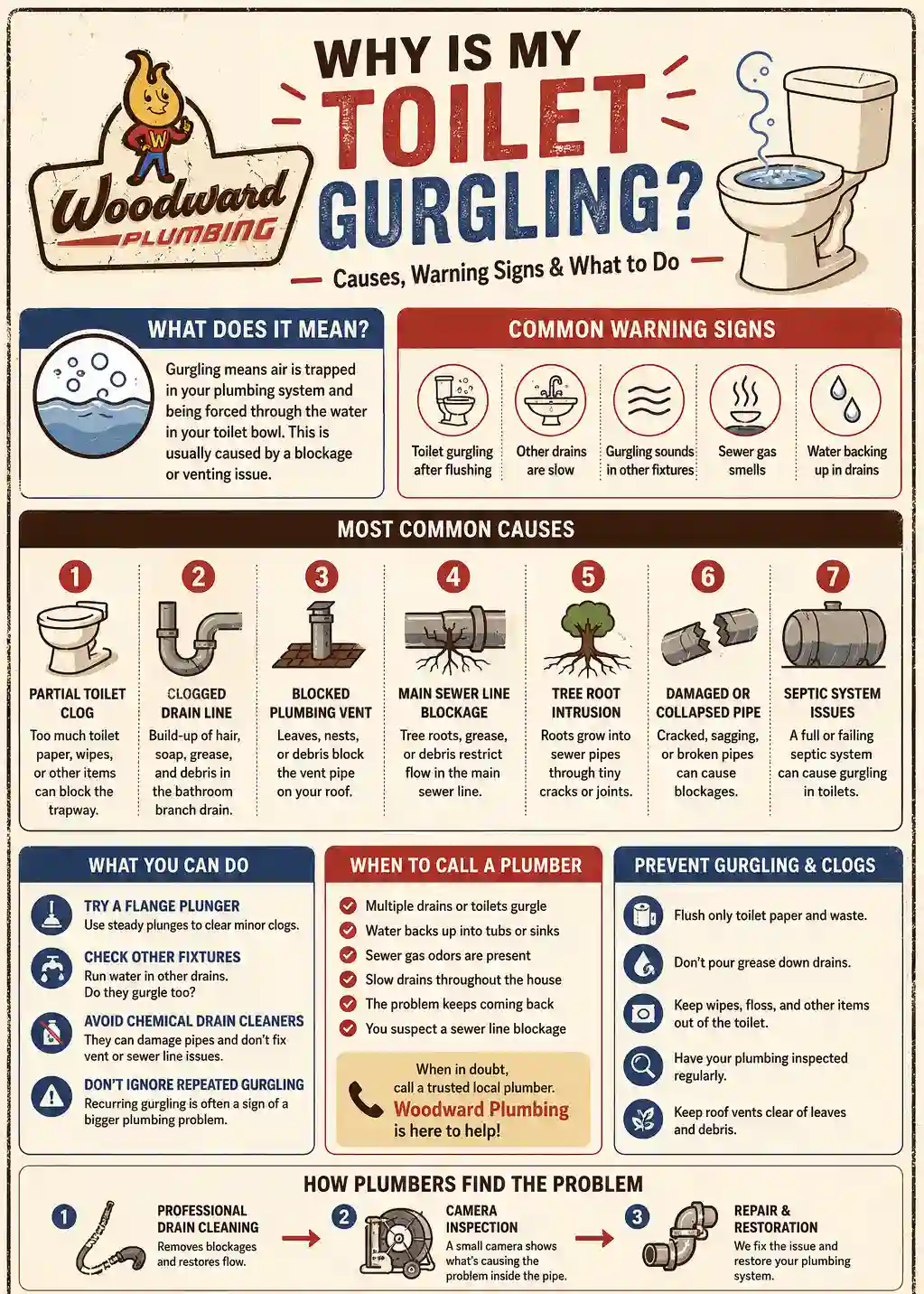
Toilet gurgling usually means air is being forced through the water in the toilet bowl because it cannot move normally through the drain and vent system.
Wastewater flowing through a drainpipe displaces air. Your plumbing vent pipe allows replacement air to enter the drainage system while also helping sewer gases exit safely above the roof. This balanced airflow helps toilets, sinks, showers, and other fixtures drain smoothly.
When a drain or vent becomes restricted, pressure inside the piping changes. Air may become trapped behind moving wastewater or pulled through the nearest available opening. Because the toilet bowl contains water, escaping air creates visible bubbles and the familiar gurgling noise.
This is why a toilet may gurgle even when no one is flushing it. A washing machine, shower, bathtub, or nearby toilet may be sending water through a shared drain line and moving trapped air toward your toilet.
The American Society of Plumbing Engineers explains that drainage creates negative pressure that must be equalized by introducing air. Without proper airflow, water can be siphoned from fixture traps and sewer gases may enter occupied areas. You can learn more from this overview of drainage pressure and air admittance valves.
Why Is My Toilet Gurgling After Flushing?
A toilet gurgling after flushing most commonly points to a partial obstruction in the toilet trap, the branch drain serving the bathroom, or the main sewer line. Water may still pass around the obstruction, but the reduced space changes the pressure inside the pipe.
The timing of the noise provides useful information:
- Gurgling immediately after the toilet flushes: The clog may be inside the toilet trap or close to the fixture.
- Gurgling several seconds after flushing: The restriction may be farther down the branch drain.
- Gurgling when another toilet flushes: The toilets may share a partially blocked drain or vent.
- Gurgling when the shower or washing machine drains: The problem may involve a shared drain, plumbing vent clog, or main sewer line.
- Gurgling throughout several fixtures: A main drain or sewer line blockage becomes more likely.
A single unusual sound after one heavy flush may not indicate a serious problem. Persistent toilet bubbling after flushing, recurring slow drains, or changes in the water level inside the bowl should be investigated.
Common Causes of a Gurgling Toilet
1. A Partial Clog in the Toilet
A localized toilet clog is one of the most common causes of toilet gurgling. The toilet may still flush, but waste and water are squeezing past an obstruction instead of moving freely.
Common materials that create partial toilet clogs include:
- Excessive toilet paper
- Paper towels or facial tissues
- Baby wipes and cleaning wipes
- Feminine hygiene products
- Cotton swabs or cotton balls
- Dental floss
- Small toys or household objects
- Excess waste combined with a weak flush
Products marketed as flushable can still contribute to clogged drains. Many wipes remain intact much longer than toilet paper and can catch on rough pipe interiors, roots, fittings, or existing buildup. A municipal utility explanation of why flushable wipes clog sewer systems notes that these products do not break apart like standard toilet paper.
If only one toilet is affected and every other fixture drains normally, start by considering a localized clog. Persistent flushing problems may also indicate an issue with the toilet itself, including restricted internal passages or poor flushing performance. Woodward Plumbing provides additional information about toilet repair and replacement in Salem when the fixture needs more than basic clog removal.
2. A Clogged Bathroom Drain Line
The blockage may be beyond the toilet but still limited to one bathroom. Toilets, sinks, tubs, and showers are often connected to a shared branch drain before that pipe reaches the main building drain.
A restriction in this branch line may cause the toilet to gurgle when:
- The shower drains
- The bathroom sink is used
- A nearby toilet is flushed
- The bathtub releases a large amount of water
Hair, soap residue, paper products, mineral deposits, and other debris may gradually reduce the inside diameter of the drain. As water passes the obstruction, displaced air can bubble through the toilet bowl.
When multiple fixtures in the same bathroom are slow but the rest of the house drains normally, the bathroom branch line is a likely location. Professional drain cleaning and repair may be needed when plunging the toilet does not restore normal drainage.
3. A Blocked Plumbing Vent Pipe
Your home’s plumbing vent pipe typically extends through the roof. It brings air into the drainage system and allows gases to exit above the home. When this pipe becomes blocked, the plumbing system may pull air through a toilet or sink trap instead.
A plumbing vent clog may be caused by:
- Leaves and pine needles
- Twigs or nesting material
- Bird, rodent, or insect activity
- Roofing debris
- Ice during freezing weather
- Corrosion or damage inside an older vent
- An improperly installed or undersized vent
A blocked plumbing vent often causes more than one symptom. You may hear gurgling from several fixtures, notice slower drainage, detect a sewer gas smell, or see the toilet bowl’s water level change after another fixture drains.
Oregon plumbing requirements recognize the importance of open venting. State guidance notes that a plumbing system must have a stack vent extending outdoors to open air. The applicable details can be reviewed in this Oregon plumbing guidance on venting and air admittance valves.
Vent inspection frequently requires roof access and specialized equipment. Homeowners should not climb onto a wet, icy, steep, or unfamiliar roof to investigate a gurgling toilet.
4. A Main Sewer Line Blockage
A blockage in the main sewer line is more serious than an isolated toilet clog. The main line carries wastewater from every fixture in the home toward the municipal sewer or septic system. When this line becomes restricted, pressure and wastewater can move backward toward the home’s lowest fixtures.
Common causes of a main sewer line blockage include:
- Tree-root intrusion
- Accumulated grease or sludge
- Wipes and other non-degradable products
- Damaged or offset pipe joints
- Collapsed clay, concrete, or cast-iron pipe
- Heavy corrosion
- Improper pipe slope
- Soil movement around the buried sewer line
One toilet may gurgle first, but additional signs often appear as the blockage grows. You may notice multiple drains backing up, sewage odors, water rising in a shower when a toilet is flushed, or gurgling from toilets in different parts of the home.
Homeowners experiencing several of these symptoms can review the common signs of sewer line problems. A professional evaluation may include drain clearing followed by a camera inspection to identify roots, cracks, offsets, or collapsed sections.
5. Tree Roots Inside the Sewer Line
Tree roots are a frequent concern in established Oregon neighborhoods. Roots naturally grow toward moisture and can enter a sewer pipe through a small crack, loose joint, or deteriorated connection.
Once inside, roots continue growing and catch toilet paper, wipes, grease, and other debris. The result is often a recurring clog that temporarily improves after snaking but returns because the underlying pipe opening remains.
Possible signs of root intrusion include:
- Clogs that return every few months
- Several slow drains
- Toilet gurgling after heavy water use
- Changes in drainage during wet seasons
- Older clay or cast-iron sewer piping
- Large trees near the sewer route
A plumbing camera inspection can show whether roots are present, where they entered, and how much of the pipe is affected. This information helps determine whether rooter service, pipe cleaning, targeted repair, or sewer line replacement is appropriate.
6. A Damaged or Collapsed Sewer Pipe
Not every sewer blockage consists of removable debris. A pipe may be cracked, sagging, separated, offset, or partially collapsed. Waste can repeatedly collect at the damaged area and create ongoing drainage problems.
Older sewer materials may become more vulnerable as they age. Clay pipe joints can separate, cast iron can corrode internally, and aging connections may allow root intrusion. Soil settlement and ground movement can also alter the pipe’s slope.
Repeatedly clearing a damaged line may restore flow temporarily without correcting the structure of the pipe. A sewer camera helps distinguish an ordinary blockage from physical pipe failure. When damage is confirmed, sewer line repair may be necessary to restore reliable drainage.
7. A Full or Failing Septic System
Homes connected to a septic system can experience toilet bubbling when the tank is too full, the outlet is obstructed, or the drain field is not accepting wastewater properly.
The plumbing inside the house may appear normal, but wastewater has nowhere to go once it reaches the septic system. Air and water can then push backward through the drain lines.
Homeowners with septic systems should consider the date of the last pumping, recent household water use, weather conditions, and whether drains throughout the home are slowing. A septic professional may need to inspect the tank and drain field.
How to Tell Where the Problem Is Located
You do not need to disassemble plumbing to gather useful information. A few observations can help separate a toilet clog from a larger drainage problem.
Only One Toilet Is Gurgling
When one toilet gurgles but all sinks, showers, tubs, and other toilets drain normally, the problem is likely close to that toilet. A partial clog in the toilet trap or branch line is the most common explanation.
One Bathroom Has Several Slow Fixtures
When the toilet, sink, and shower in one bathroom are affected, a shared branch drain or vent is more likely. Pay attention to whether using one fixture causes a reaction in another.
Several Toilets Are Gurgling
Multiple gurgling toilets suggest a restriction in a larger shared drain, the main sewer line, or the primary venting system. This becomes especially likely when the toilets are located on different floors or opposite sides of the home.
The Toilet Gurgles When the Washing Machine Drains
Washing machines release a substantial amount of water quickly. A partially blocked main drain may not show symptoms during light sink use but can struggle with the washer’s discharge. The rapidly moving water pushes trapped air toward the nearest toilet.
Water Backs Up Into a Shower or Tub
This strongly suggests a drain or sewer blockage. Showers and tubs are usually among the lowest open fixtures in a home. When the main line cannot accept wastewater, water may rise through these drains first.
Stop using water and avoid additional flushing when wastewater is backing up into another fixture.
Can I Fix a Gurgling Toilet Myself?
Some isolated toilet clogs can be cleared safely with a plunger or toilet auger. Broader drainage and venting problems usually require professional equipment.
Try a Flange Plunger
Use a toilet plunger with an extended flange rather than a flat sink plunger. The flange fits into the toilet drain opening and creates a stronger seal.
- Make sure the bowl contains enough water to cover the plunger cup.
- Place the flange securely into the drain opening.
- Begin with a gentle push to release trapped air inside the plunger.
- Use several controlled plunging strokes without breaking the seal.
- Remove the plunger and observe whether the bowl drains normally.
- Flush once only after the water level has returned to normal.
Do not repeatedly flush a toilet when the water level is rising. Shut off the toilet’s supply valve if it appears likely to overflow.
Check Other Fixtures
Run a small amount of water in nearby fixtures and observe the toilet. A toilet that bubbles when the shower or sink drains probably has a problem beyond the toilet trap.
Also check fixtures in other bathrooms. Multiple slow drains or gurgling fixtures point toward a larger blockage.
Use a Toilet Auger Carefully
A closet auger is designed to pass through the curved toilet trap without damaging the visible porcelain. It may remove or break apart an obstruction that a plunger cannot reach.
A standard drain snake can scratch the toilet bowl and may become stuck inside the trap. Do not force a cable when it stops moving. Objects such as toys, caps, or hard plastic items may require the toilet to be removed rather than pushed farther into the drain.
Avoid Chemical Drain Cleaners
Chemical drain cleaners are not a reliable solution for a gurgling toilet. They may remain inside the bowl or pipe when the drain is blocked, creating a splash and exposure hazard for anyone who later works on the fixture.
Harsh chemicals can also damage certain plumbing materials and rarely correct blocked vents, root intrusion, collapsed pipes, or main sewer line problems. Mechanical diagnosis and cleaning are generally more appropriate.
Do Not Take Unnecessary Roof Risks
A visible pile of leaves at the top of a vent may be removable from a safe, stable location. Deeper vent blockages require proper access, fall protection, and drain-cleaning equipment.
Oregon roofs can be slippery from rain, moss, frost, or debris. Avoid climbing onto the roof solely to troubleshoot a toilet noise.
When Should You Call a Plumber?
Call a plumber when the gurgling continues after basic plunging or when symptoms affect more than one fixture.
Professional assistance is particularly important when:
- Multiple toilets or drains are gurgling
- The toilet bubbles when the washer or shower drains
- Water backs up into a tub, shower, or floor drain
- You notice a sewer gas smell
- The toilet is close to overflowing
- Several drains are slow
- The problem keeps returning
- You suspect tree roots or an older sewer line
- A toilet auger does not clear the blockage
- Wastewater is entering the home
An active sewage backup or overflowing toilet may require an emergency plumber in Salem. Stop using toilets, sinks, showers, dishwashers, and washing machines until the blockage has been evaluated.
How Plumbers Diagnose a Gurgling Toilet
Fixture and Drain Testing
The plumber may begin by flushing toilets and running nearby fixtures to identify which drain connection triggers the sound. This helps determine whether the problem is isolated, limited to one branch, or affecting the main line.
Rooter Service or Mechanical Drain Cleaning
A motorized drain-cleaning cable can reach farther than a household toilet auger. Different cutter heads may be used for paper, soft obstructions, buildup, or roots.
Homeowners unfamiliar with this process can read more about when a plumbing system needs rooter service. Woodward Plumbing also offers rooter services in Salem for persistent and recurring drain blockages.
Plumbing Camera Inspection
A waterproof sewer camera can be inserted through a cleanout or drain opening. The camera shows the interior condition of the pipe and may reveal:
- Tree roots
- Grease or sludge buildup
- Foreign objects
- Cracks
- Separated joints
- Pipe corrosion
- Low or sagging sections
- Partial collapse
A camera inspection is especially valuable when the problem returns after cleaning. It allows repair recommendations to be based on visible pipe conditions rather than assumptions.
Sewer Line Repair
Cleaning is often enough when the pipe remains structurally sound. Repair may be recommended when the camera confirms a broken, shifted, or collapsed section.
The appropriate repair depends on pipe material, location, depth, access, and the extent of the damage. Not every gurgling toilet leads to sewer replacement, which is why accurate diagnosis should come before major work.
Oregon Plumbing Conditions That Can Contribute to Gurgling
Generic plumbing advice does not always account for conditions in Salem and the Willamette Valley. Local housing age, seasonal moisture, trees, and occasional freezing temperatures can influence drainage problems.
Older Sewer Materials
Many established Oregon homes contain older sections of cast iron, clay, concrete, galvanized steel, or early plastic piping. These materials can develop corrosion, rough interior surfaces, loose joints, or cracks as they age.
Rough or damaged areas collect waste more easily than smooth, properly sloped pipe. Older joints also provide entry points for roots.
Tree-Root Growth
Oregon’s vegetation and long growing season can place buried sewer lines near active root systems. Roots may enter through very small defects and gradually create dense obstructions.
Wet Soil and Ground Movement
Extended rain can saturate the soil around buried plumbing. Moisture does not automatically clog a properly functioning sewer line, but shifting or settling soil may worsen an existing weak connection, sagging pipe, or crack.
A toilet that begins gurgling during wet weather and continues afterward may need a sewer camera inspection.
Freezing Vent Openings
Although prolonged severe freezes are less common in the Willamette Valley than in colder regions, winter cold can still affect exposed piping and roof vents. Frost, snow, or ice around a vent opening may temporarily restrict airflow.
Seasonal Debris
Leaves, needles, twigs, and nesting material can enter an unprotected roof vent. Homes near mature trees may be more vulnerable, especially after windstorms.
How to Prevent Toilet Gurgling and Drain Blockages
Flush Only Toilet Paper and Waste
Keep wipes, paper towels, hygiene products, cotton products, floss, and household objects out of the toilet. A nearby covered wastebasket makes proper disposal easier.
Respond to Slow Drains Early
A slow drain often appears before complete blockage. Pay attention when more than one fixture begins draining slowly or when plunging provides only temporary relief.
Do Not Pour Grease Into Kitchen Drains
Grease can cool and cling to the inside of drainpipes. Other debris sticks to the grease, gradually reducing the available space for water and air.
Protect Toilets From Foreign Objects
Homes with young children may benefit from toilet lid locks. Keep shelves and small objects away from open toilets to reduce accidental flushing.
Maintain Older Sewer Lines
Homes with known root intrusion, aging piping, or recurring clogs may benefit from periodic inspection and preventative cleaning. The schedule should be based on the pipe’s actual condition rather than a universal interval.
Follow a Broader Plumbing Maintenance Plan
Regularly checking fixtures, drains, shutoff valves, exposed pipes, and water-using appliances can reveal developing plumbing problems sooner. Woodward Plumbing’s guide to maintaining home plumbing systems provides additional preventative steps for homeowners.
Frequently Asked Questions About Gurgling Toilets
Why does my toilet gurgle after I flush it?
A toilet gurgling after a flush usually means water and air are having difficulty moving through the drain. The cause may be a partial toilet clog, blocked branch drain, plumbing vent clog, or main sewer line blockage.
Why is my toilet bubbling when I use the shower?
The shower and toilet may share a drain or vent connection. As shower water enters the restricted pipe, it pushes trapped air through the toilet bowl. A branch drain, vent, or main line may be partially blocked.
Why does the downstairs toilet gurgle when the upstairs toilet flushes?
The toilets likely connect to a shared drain stack. Water from the upper toilet may be compressing air or encountering a blockage before it reaches the main sewer. The lower toilet becomes an escape point for that air.
Can a blocked plumbing vent cause toilet bubbling?
Yes. A blocked plumbing vent prevents air from entering and leaving the drainage system normally. Pressure changes can then pull air through the toilet trap, creating bubbles and gurgling sounds.
How do I know whether the main sewer line is clogged?
Common signs include multiple slow drains, several gurgling toilets, water backing up into tubs or showers, sewage odors, and drainage problems that return after plunging. A camera inspection can confirm the cause and location.
Should I plunge a gurgling toilet?
Plunging is reasonable when only one toilet is affected and the bowl is not close to overflowing. Stop if wastewater is backing up elsewhere or several fixtures are involved, because the blockage may be farther down the system.
Can a gurgling toilet fix itself?
A small amount of paper may eventually move through, but recurring gurgling should not be expected to resolve permanently. Partial blockages often collect more debris and become complete obstructions.
Is a gurgling toilet an emergency?
The sound alone may not be an emergency, but sewage backup, an overflowing toilet, wastewater entering a shower, or several unusable drains requires prompt professional attention.
Can I use chemical drain cleaner in a gurgling toilet?
Chemical drain cleaners are not recommended. They may damage plumbing materials, remain trapped inside a blocked line, create hazardous splashing, and cannot correct vent obstructions, roots, or broken sewer pipes.
How long does it take to fix a gurgling toilet?
A simple toilet clog may be cleared during a short service visit. Branch drain or main sewer cleaning can take longer, particularly when camera inspection or difficult cleanout access is involved. Structural sewer damage may require a separate repair plan.
How much does it cost to repair a gurgling toilet?
The cost depends on the cause. Clearing a localized toilet clog is generally less involved than cleaning a main sewer line, removing roots, inspecting pipes with a camera, or repairing damaged underground piping. Diagnosis is necessary before an accurate price can be provided.
Can heavy rain make a toilet gurgle?
Heavy rain may contribute when an underground sewer pipe is already damaged, poorly sloped, or affected by groundwater infiltration. Wet soil may also worsen movement around aging or weakened piping. Persistent symptoms after a storm should be inspected.
Why does my toilet smell like sewer gas when it gurgles?
Pressure changes may be pulling air through the toilet or another fixture trap. A blocked vent, low trap water level, loose toilet seal, or sewer line problem may be involved. Sewer odors combined with gurgling should be investigated promptly.
Does toilet gurgling mean the toilet needs to be replaced?
Usually not. Most gurgling is related to drainage or venting rather than the toilet itself. Replacement may be appropriate when the fixture has damaged internal passages, recurring performance problems, cracks, or inefficient flushing that contributes to frequent clogs.
Do Not Ignore a Toilet That Keeps Gurgling
A gurgling toilet is usually an airflow or drainage warning. The cause may be as simple as excess toilet paper caught in the trap, but it can also indicate a blocked plumbing vent, root intrusion, or developing main sewer line blockage.
Start by observing whether the problem affects one toilet, one bathroom, or several fixtures throughout the home. A flange plunger may clear an isolated toilet clog. Stop using water and seek professional help when multiple drains are affected, wastewater backs up, sewer odors appear, or the problem repeatedly returns.
Woodward Plumbing helps Salem-area homeowners diagnose toilet, drain, vent, and sewer line problems using professional drain-cleaning equipment and camera inspection technology. Identifying the actual cause early is the most reliable way to restore normal drainage and prevent a minor gurgle from becoming a larger plumbing backup.