Slow drains, recurring clogs and unpleasant odors can make any homeowner feel helpless. In Oregon and across the Pacific Northwest, these problems often come from more than just soap scum or food waste. Heavy rainfall, older plumbing systems, mature tree roots, and seasonal moisture all contribute to stubborn drain and sewer line buildup.
Many homeowners try plungers, drain cleaners, or store-bought solutions first. Sometimes those methods work temporarily. But when drains keep backing up, toilets start gurgling, or sewage odors appear, the issue often runs much deeper inside the plumbing system.
That’s where hydrojet drain cleaning comes in.
Hydrojetting is one of the most effective professional drain cleaning methods available today. Instead of simply punching a hole through a clog like a traditional drain snake, hydrojet plumbing uses highly pressurized water to fully scrub the inside walls of the pipe.
For homeowners throughout Salem, Corvallis, Albany, Gates, McMinnville, and surrounding Oregon communities, hydrojetting can help restore flow, remove buildup, clear roots, and prevent recurring drain problems before they become emergencies.
In this guide, we’ll explain:
- What hydrojet drain cleaning is
- How hydrojet plumbing works
- How effective hydrojetting really is
- Typical hydrojet drain cleaning cost ranges
- When hydrojetting is worth it
- Whether it’s safe for older Oregon plumbing systems
- Common homeowner concerns and misconceptions
- How hydrojetting compares to snaking
- Local Oregon plumbing considerations
We’ll also answer the most common homeowner questions found across Reddit discussions, Google People Also Ask results, plumbing forums, and local service conversations.
What Is Hydrojet Drain Cleaning?
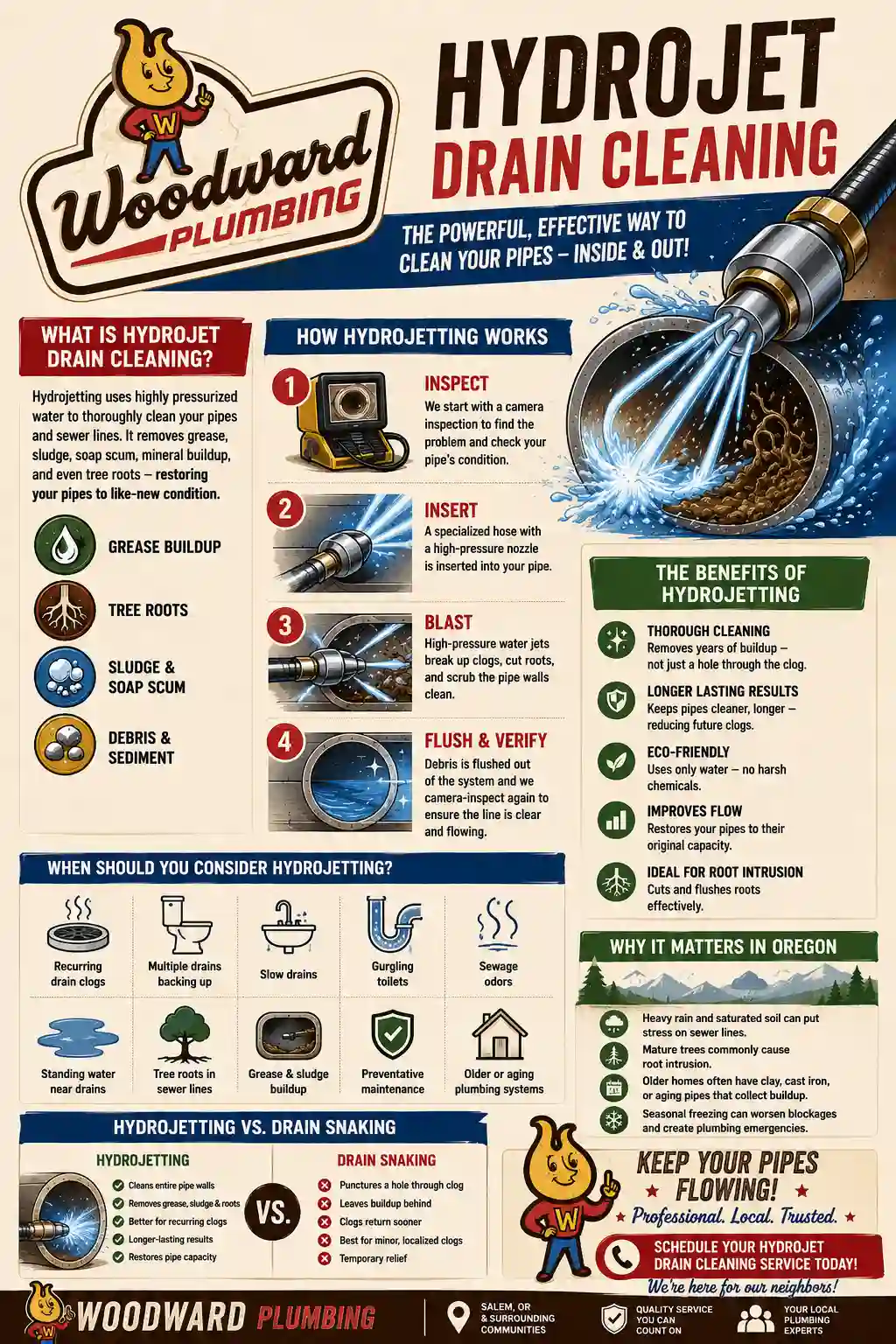
Hydrojet drain cleaning is a professional plumbing service that uses highly pressurized water to clean the inside of drain pipes and sewer lines.
The process involves feeding a specialized hose and nozzle into the plumbing system. Water is then pressurized — often between 1,500 and 4,000 PSI for residential plumbing systems — and blasted through the line.
The nozzle contains multiple directional jets:
- Forward-facing jets break apart clogs
- Rear-facing jets propel the hose through the pipe
- Rotating jets scrub the interior pipe walls
Unlike traditional drain snakes that only poke through blockages, hydrojetting cleans the entire inside diameter of the pipe.
This allows hydrojet plumbing to remove:
- Grease buildup
- Soap scum
- Hair clogs
- Sludge
- Mineral buildup
- Food debris
- Tree roots
- Sediment
- Bacterial biofilm
The EPA recognizes water jetting as one of the most effective hydraulic sewer cleaning methods because it thoroughly cleans lines while avoiding harsh chemicals.
EPA sewer infrastructure resources
How Hydrojet Plumbing Works
Many homeowners imagine hydrojetting as simply “spraying water through pipes,” but professional hydrojet drain cleaning is a carefully controlled plumbing process.
Step 1: Video Camera Inspection
Before hydrojetting begins, plumbers typically perform a sewer camera inspection.
This helps identify:
- The location of the blockage
- Pipe material
- Pipe condition
- Cracks or damage
- Root intrusion
- Collapsed sections
- Offset joints
- Heavy grease buildup
This step is extremely important because hydrojetting is not appropriate for every pipe system.
Older clay sewer lines, Orangeburg pipes, or severely deteriorated cast iron systems may require repairs before hydrojetting can safely occur.
Step 2: Selecting the Correct Nozzle
Different hydrojet nozzles are used for different problems.
For example:
- Grease nozzles remove kitchen sludge
- Root-cutting nozzles break apart roots
- Flushing nozzles remove debris and sediment
- Rotating nozzles scrub pipe walls
The plumber also adjusts water pressure based on:
- Pipe age
- Pipe material
- Pipe diameter
- Severity of blockage
Step 3: High-Pressure Cleaning
The hydrojet hose is inserted into the line through a cleanout or access point.
As the water jets fire:
- Clogs break apart
- Grease is stripped away
- Roots are cut and flushed
- Pipe walls are cleaned
- Debris is pushed downstream
The rear-facing jets help move the hose deeper into the system while continuously cleaning behind it.
This process restores much of the pipe’s original flow capacity.
Step 4: Final Camera Verification
After cleaning, another camera inspection is often performed.
This verifies:
- The blockage has been removed
- The line is flowing properly
- No major structural issues remain
- Additional repairs are not needed
This final inspection gives homeowners visual confirmation of the results.
How Effective Is Hydrojet Drain Cleaning?
Hydrojetting is considered one of the most effective professional drain cleaning methods available for severe or recurring drain problems.
Homeowners often ask:
- “Does hydrojetting actually work?”
- “Is hydrojetting worth the cost?”
- “Why not just use a drain snake?”
The answer depends on the condition of the plumbing system and the type of blockage involved.
For heavy buildup, recurring sewer problems, and root intrusion, hydrojetting is significantly more effective than basic snaking.
Hydrojetting Cleans the Entire Pipe
A traditional auger or drain snake usually creates a small opening through a clog.
That restores temporary flow.
But it often leaves:
- Grease residue
- Sludge
- Biofilm
- Mineral deposits
- Root fragments
Those materials remain attached to pipe walls and quickly collect debris again.
Hydrojetting removes the buildup from the entire interior surface of the pipe.
That deeper cleaning is why hydrojet drain cleaning often lasts much longer than snaking alone.
Hydrojetting Is Extremely Effective for Grease
Kitchen drain clogs are one of the most common plumbing problems homeowners face.
Grease, oils, fats, soap residue, and food particles slowly coat the inside of kitchen drain lines.
Over time, the buildup hardens.
Store-bought chemicals usually cannot fully dissolve these layers.
Snaking often cuts a hole through the center but leaves thick grease attached to pipe walls.
Hydrojetting strips away that buildup much more effectively.
This is one reason restaurants frequently schedule recurring hydrojet plumbing service as preventative maintenance.
Hydrojetting Is Highly Effective for Tree Roots
Tree root intrusion is extremely common in Oregon sewer systems.
Older homes in Salem, Albany, Corvallis, and surrounding areas often have aging clay or cast iron sewer lines with small cracks or loose joints.
Roots naturally seek moisture and nutrients.
Once roots enter the line, they expand and trap:
- Toilet paper
- Grease
- Waste
- Sludge
- Debris
Hydrojetting can cut and flush smaller root intrusions very effectively.
However, homeowners should understand:
Hydrojetting removes roots, but it does not permanently stop root intrusion if the pipe itself remains damaged.
If roots repeatedly return, the line may eventually need:
- Spot repairs
- Pipe lining
- Trenchless sewer repair
- Full sewer replacement
Hydrojetting vs Drain Snaking
One of the biggest homeowner debates online involves hydrojetting versus traditional drain snaking.
Here’s the difference.
Drain Snaking
A drain snake or auger:
- Punches through clogs
- Pulls out some debris
- Restores temporary flow
- Works well for simple localized clogs
- Costs less initially
Snaking is useful for:
- Hair clogs
- Minor sink backups
- Simple toilet clogs
- Retrieving objects
However, snaking often leaves buildup behind.
Hydrojet Drain Cleaning
Hydrojetting:
- Fully cleans pipe walls
- Removes sludge and grease
- Flushes debris downstream
- Handles recurring clogs better
- Addresses larger sewer issues
- Provides longer-lasting results
Hydrojetting is typically better for:
- Main sewer line cleaning
- Recurring backups
- Grease buildup
- Root intrusion
- Heavy sludge
- Preventative sewer maintenance
Many plumbers actually use both methods together.
For example:
- Snaking breaks up a severe blockage
- Hydrojetting fully cleans the pipe afterward
Hydrojet Drain Cleaning Cost
Hydrojet drain cleaning cost varies depending on several factors.
Across Oregon, homeowners commonly pay anywhere from:
- $300–$600 for moderate residential hydrojetting
- $600–$1,400 for larger or more complex sewer line cleaning
- More for severe root intrusion or emergency service
Several factors affect pricing.
Severity of the Blockage
Heavy grease, compacted sludge, or dense root systems require more time and specialized nozzles.
Pipe Length
Long sewer laterals naturally take longer to clean.
Accessibility
If the line lacks an accessible cleanout, additional labor may be needed.
Emergency Service
Emergency hydrojet drain cleaning after hours typically costs more.
Camera Inspection
Most professional hydrojet services include or recommend sewer camera inspections.
This helps protect homeowners from unnecessary damage or incorrect diagnoses.
Is Hydrojetting Safe for Older Pipes?
This is one of the most common homeowner concerns online.
The answer is:
Hydrojetting is safe when performed properly on structurally sound pipes.
Professional plumbers adjust pressure levels based on:
- Pipe age
- Pipe material
- Pipe diameter
- Pipe condition
However, hydrojetting may not be appropriate for:
- Collapsed sewer lines
- Severely cracked pipes
- Deteriorated Orangeburg pipe
- Extremely brittle clay systems
- Badly corroded cast iron
This is why sewer camera inspections are critical before hydrojetting begins.
Hydrojetting does not “damage good pipes.”
Instead, it may reveal already failing infrastructure that was hidden beneath years of buildup.
Why Oregon Homes Commonly Need Hydrojetting
Several regional conditions make hydrojetting especially valuable in Oregon.
Heavy Rain & Saturated Soil
Oregon’s wet climate increases pressure around buried sewer lines.
That moisture can:
- Shift soil
- Misalign joints
- Accelerate root intrusion
- Increase sewer infiltration
Mature Trees
Large established trees are common throughout the Willamette Valley.
Those root systems aggressively seek moisture.
Even tiny cracks become entry points.
Older Plumbing Infrastructure
Many homes throughout Salem and surrounding communities still contain:
- Cast iron sewer lines
- Clay pipe systems
- Galvanized piping
- Aging drain systems
These systems accumulate buildup more easily than modern PVC.
Seasonal Freezing Risks
Although Oregon winters are milder than many states, freezing temperatures still affect exposed plumbing.
Slow-moving or partially clogged drain systems are more vulnerable to freezing and expansion damage.
Signs You May Need Hydrojet Drain Cleaning
Hydrojetting is often recommended when homeowners experience recurring or severe plumbing symptoms.
Warning signs include:
- Recurring drain clogs
- Multiple drains backing up simultaneously
- Gurgling toilets
- Slow kitchen drains
- Frequent sewer backups
- Persistent sewage odors
- Standing water around floor drains
- Tree roots in sewer inspections
- Grease buildup
- Sludge accumulation
- Water backing into tubs or showers
If these issues repeatedly return after snaking, hydrojetting may provide a more complete solution.
Can Hydrojetting Prevent Future Clogs?
Hydrojetting can significantly reduce future drain problems because it fully removes buildup from the pipe walls.
However, no plumbing service permanently prevents all future clogs.
Long-term results depend on:
- Pipe condition
- Tree root activity
- Grease habits
- Drain maintenance
- Aging infrastructure
Many Oregon homeowners schedule preventative hydrojet drain cleaning every 1–2 years for high-risk sewer systems.
This is especially common for:
- Older homes
- Homes with mature landscaping
- Homes with prior sewer backups
- Properties with recurring root intrusion
DIY Hydrojetting: Is It Worth It?
Many homeowners researching hydrojet plumbing online ask whether they can rent hydrojet equipment themselves.
Technically, rental equipment exists.
But DIY hydrojetting is risky.
Improper hydrojetting can:
- Damage pipes
- Flood the home
- Cause sewage exposure
- Create dangerous pressure injuries
- Worsen existing pipe failures
Professional plumbers understand:
- Pressure calibration
- Pipe materials
- Nozzle selection
- Sewer diagnostics
- Flow control
- Safety protocols
Most homeowners are far better off hiring a licensed professional.
Hydrojetting FAQs
What is hydrojet drain cleaning?
Hydrojet drain cleaning is a plumbing method that uses highly pressurized water to clean the inside of drain pipes and sewer lines. It removes grease, sludge, roots, and buildup more thoroughly than traditional drain snaking.
How effective is hydrojetting?
Hydrojetting is extremely effective for grease buildup, recurring clogs, sludge, root intrusion, and sewer line cleaning because it cleans the entire inside surface of the pipe.
Is hydrojetting better than snaking?
For severe or recurring clogs, yes. Snaking typically punches through a blockage while hydrojetting fully cleans the pipe walls.
Can hydrojetting remove tree roots?
Hydrojetting can cut and flush smaller root intrusions very effectively. However, roots may eventually return if the sewer pipe itself remains cracked or damaged.
How much does hydrojet drain cleaning cost?
Typical residential hydrojet drain cleaning cost ranges from about $300 to $1,400 depending on blockage severity, pipe length, accessibility, and emergency timing.
Is hydrojetting safe for old pipes?
Hydrojetting is safe for structurally sound pipes when performed properly. A sewer camera inspection helps determine whether older pipes can safely handle hydrojetting pressure.
How long does hydrojetting last?
Many homeowners experience clear drains for 1–2 years after hydrojetting depending on pipe condition, root intrusion, and maintenance habits.
Can hydrojetting damage pipes?
Hydrojetting generally does not damage healthy pipes. However, severely deteriorated, collapsed, or fragile systems may require repair before hydrojetting is safe.
What causes recurring sewer clogs in Oregon?
Common causes include tree root intrusion, grease buildup, aging cast iron or clay sewer lines, heavy rainfall, shifting soil, and seasonal moisture.
Should I hydrojet my sewer line preventatively?
Preventative hydrojetting is often recommended for older homes, homes with recurring sewer problems, or properties with heavy root intrusion.
Helpful Related Woodward Plumbing Resources
- Drain Cleaning & Repair in McMinnville, OR
- Drain Cleaning & Repair in Corvallis, OR
- Drain Cleaning & Repair in Albany, OR
- Plumbing Services in Gates, OR
- Plumbing Services in Salem, OR
- Recognizing Slab Leaks in Oregon Houses
- Signs of Hidden Pipe Leaks Inside Your Home
- Water Pressure Solutions Plumbers Wish You Wouldn’t Do
Conclusion
Hydrojet drain cleaning is one of the most powerful and effective plumbing maintenance solutions available for severe drain and sewer line buildup.
Unlike traditional snaking, hydrojet plumbing fully cleans the interior of pipes using highly pressurized water. This makes it especially valuable for:
- Recurring clogs
- Grease buildup
- Sludge accumulation
- Root intrusion
- Main sewer line maintenance
- Preventative plumbing care
For Oregon homeowners dealing with older plumbing systems, mature landscaping, heavy rainfall, and seasonal moisture, hydrojetting can provide significantly longer-lasting results than basic drain clearing methods.
At the same time, hydrojetting isn’t the right solution for every pipe system. Proper inspections, diagnostics, and professional pressure calibration matter.
If you continue experiencing recurring sewer backups, slow drains, or root problems, professional hydrojet drain cleaning may help restore your plumbing system before the issue becomes a larger repair.
Energy.gov plumbing efficiency resources
Oregon drinking water and infrastructure resources