
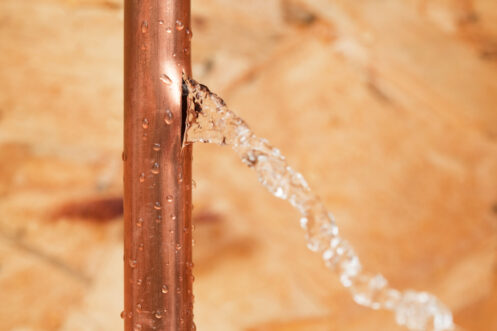
Most plumbing leaks do not begin with a burst pipe or a flooded room. They often start quietly behind a wall, beneath a floor, inside a crawl space, or under a concrete slab. Learning the early signs of pipe leaks can help you catch a problem before moisture damages drywall, flooring, cabinets, insulation, or structural materials.
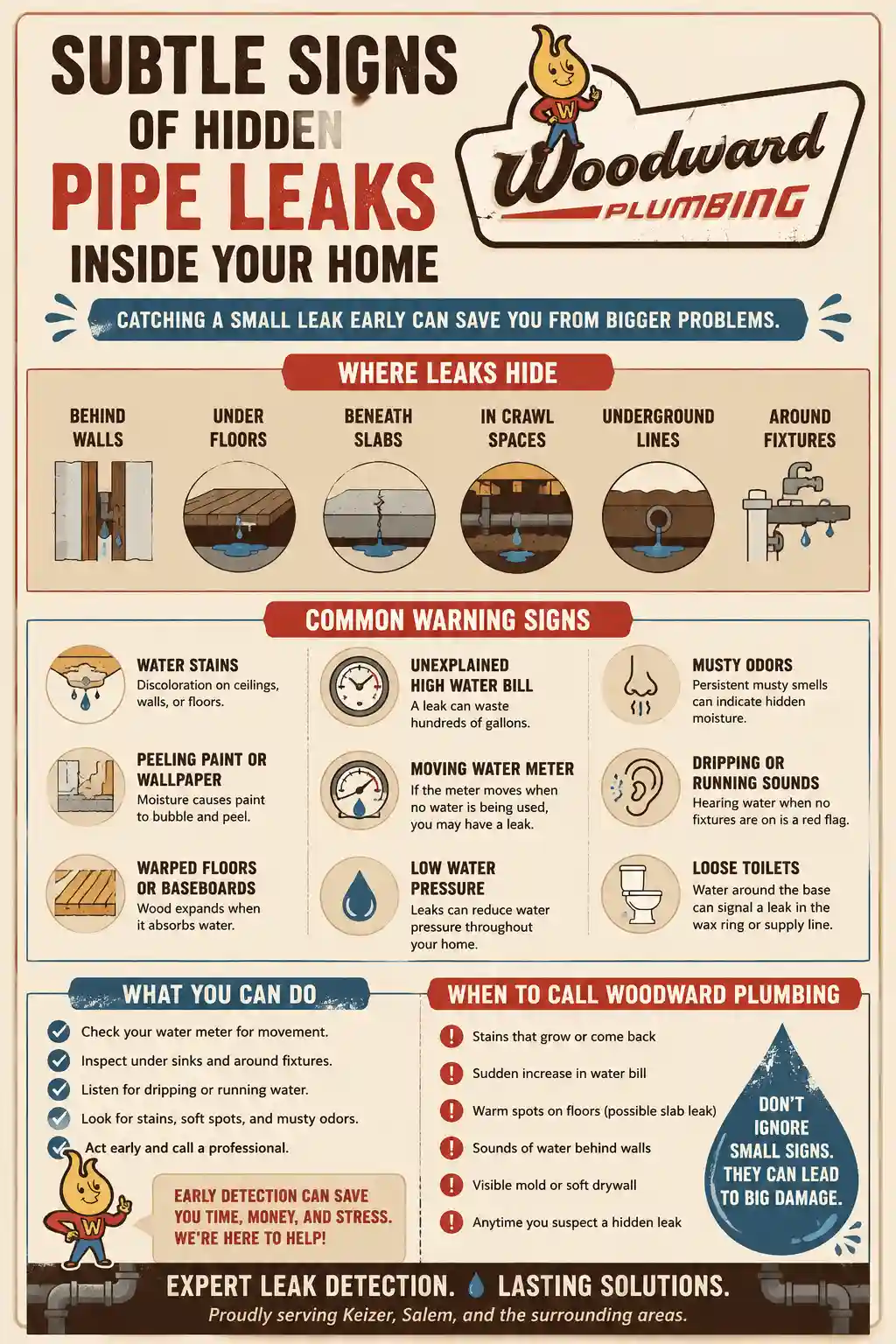
A hidden leak may first appear as a faint ceiling stain, peeling paint, an unexplained increase in your water bill, or a musty odor that does not go away. Water can travel along framing and other building materials, so the place where damage appears is not always where the pipe is leaking. This guide explains how to tell if a pipe is leaking, what common warning signs mean, and which checks homeowners can perform safely.
What Causes Pipe Leaks Inside a Home?
Pipe leaks can develop gradually as plumbing materials age or suddenly after a connection fails. Understanding what causes pipe leaks can help you identify vulnerable areas and recognize patterns that may point to a larger plumbing problem.
Aging and Corrosion
Metal pipes can deteriorate as they react with water, minerals, oxygen, and surrounding materials. Copper may develop small pinhole leaks, while older galvanized steel can corrode internally and restrict water flow. Because much of this damage begins inside the pipe, the exterior may look normal until nearby materials become damp.
Repeated leaks in an older plumbing system may indicate a broader issue rather than one isolated fitting. Homeowners dealing with recurring repairs can learn more about how to know when a home needs a full repipe.
Loose Connections, Worn Seals, and High Water Pressure
Plumbing systems contain fittings, valves, seals, and flexible supply lines that can loosen or wear out over time. Vibration from appliances and repeated temperature changes may place additional stress on these components. Excessive water pressure can also strain joints, appliance hoses, shutoff valves, and thin sections of pipe.
Leaks commonly appear beneath sinks, behind toilets, near washing machines, around water heaters, and at dishwasher or refrigerator connections. A few drops may seem minor, but repeated moisture can swell cabinets, soften drywall, and damage flooring.
Freezing, Soil Movement, and Physical Damage
Water expands as it freezes, which can split pipes in crawl spaces, garages, exterior walls, and other poorly insulated areas. Underground lines and pipes beneath slabs may also be affected by settling soil, changes in moisture levels, or foundation movement.
Installation errors can create leaks as well. Connections may not be sealed correctly, pipes can be installed under tension, and screws or nails may accidentally puncture plumbing during remodeling. Some damage appears immediately, while a small puncture or stressed joint may take months or years to become noticeable.
How to Tell if a Pipe Is Leaking Before You See Water
Hidden plumbing leaks often reveal themselves through several small changes rather than one dramatic event. One symptom may have another explanation, but multiple warning signs appearing together should be investigated.
An Unexplained Increase in Your Water Bill
A higher water bill is one of the most common signs of a leaking pipe. Seasonal irrigation, guests, or changes in household routines can raise water use, but a steady increase without a clear reason may mean water is escaping somewhere in the plumbing system.
Your Water Meter Moves While Fixtures Are Off
Turn off faucets, toilets, appliances, irrigation systems, and other water-using equipment. Wait until toilets finish refilling, then check the water meter. Record the reading and avoid using water for 15 to 30 minutes. A changing reading or moving low-flow indicator suggests that water may still be passing through the system.
This test does not identify the exact source. A running toilet, irrigation leak, appliance connection, or damaged supply line can all cause meter movement. It does confirm that further investigation may be needed.
Changes in Water Pressure or Unexplained Sounds
Water escaping from a damaged line may reduce pressure at faucets, showers, or appliances. Low pressure can also result from mineral buildup, a pressure regulator problem, or a municipal supply issue, so it is more meaningful when combined with other symptoms.
Listen after all fixtures and appliances have stopped. A steady drip, trickle, hiss, or rushing sound may indicate water moving where it should not. Persistent sounds are more concerning than brief noises that occur after normal fixture use.
Recurring Moisture or Musty Odors
Damp baseboards, soft flooring, moisture beneath cabinets, or drywall that repeatedly feels cool may point to hidden water. A musty odor in a closet, vanity, cabinet, or room next to a bathroom can also indicate materials that are staying damp inside a concealed space.
Signs of Water Leaks in Ceilings
Ceiling damage is one of the most recognizable signs of water leak in ceiling areas, but the source may not be directly above the stain. Water can travel along joists, insulation, pipes, and framing before collecting at a low point.
- Yellow or brown discoloration: Water can carry dust, minerals, and residue that leave an irregular stain or ring.
- Bubbling or peeling paint: Moisture trapped behind paint may cause blistering, cracking, or separation.
- Sagging drywall: Drywall becomes heavier and weaker as it absorbs water.
- Soft or crumbling texture: Ceiling material may feel loose or powdery after repeated moisture exposure.
- Damage that changes after water use: A stain that grows after a shower, toilet flush, sink use, or appliance cycle may involve plumbing.
- Recurring stains after repainting: Returning discoloration usually means the moisture source was not corrected.
Timing can help distinguish a plumbing leak from a roof leak. Damage that worsens during rain may involve the roof, flashing, vents, or exterior openings. Damage that changes after an upstairs bathroom or appliance is used is more likely to involve a supply line, drain, fixture, or hose.
A sagging or bulging ceiling may be holding more water than the surface suggests. Avoid standing directly beneath it or pressing on the area. Move belongings away, stop using nearby fixtures when practical, and arrange for the source to be evaluated. Professional leak detection in Salem can help narrow down the cause before unnecessary sections of the ceiling are opened.
Signs of Water Leaks Inside Walls
Wall leaks can be difficult to spot because pipes are concealed behind drywall, insulation, cabinets, and trim. Common signs of water leak in wall areas include:
- Bubbling or blistering paint
- Peeling wallpaper
- Dark gray, yellow, or brown patches
- Cracking drywall seams
- Warped baseboards or trim
- White or chalky mineral residue
- Drywall that feels soft, cool, or damp
- A musty odor near a bathroom, kitchen, laundry room, or closet
The most common locations include walls behind showers and tubs, walls shared with toilets or sinks, areas behind kitchen cabinets and dishwashers, washing machine connections, exterior hose bibs, and refrigerator supply lines.
Water does not always appear beside the damaged pipe. It may enter a wall cavity from above, travel along framing, and show up near the floor. Several signs of leaking pipes appearing together, such as a growing stain, warped trim, musty odors, and unexplained water use, provide stronger evidence than one symptom alone.
What Does a Leaking Pipe Sound Like?
A hidden pipe leak is not always silent. Listen during a quiet period after faucets, toilets, appliances, and irrigation systems have been turned off.
| Sound | What It May Indicate | Where It May Be Heard |
|---|---|---|
| Steady dripping | Water falling from a loose fitting, drain connection, or damaged line | Inside cabinets, ceilings, walls, or crawl spaces |
| Faint trickling | Water moving along framing, insulation, or a pipe | Behind bathroom walls or beneath flooring |
| Hissing | Pressurized water escaping through a small crack or pinhole | Near supply lines, valves, or water heaters |
| Rushing water | A larger leak or continuous water movement | Near a main line, slab, or underground service line |
| Intermittent tapping | Drips landing on wood, metal, plastic, or ductwork | Behind walls or above ceilings |
Not every noise means a pipe is leaking. Drains may continue flowing briefly after use, hot-water pipes can click as they expand, and a toilet may refill periodically because of a worn tank component. The key difference is persistence. A possible leak may create a steady or repeating sound while the plumbing system should be inactive.
Room-by-Room Hidden Pipe Leak Checklist
Bathrooms
- Soft flooring around a toilet, tub, or shower
- A loose or rocking toilet
- Dark grout that remains damp
- Peeling paint on a wall shared with a shower
- Ceiling stains below an upstairs bathroom
- Musty odors inside a vanity or linen closet
- Dripping sounds after the shower is turned off
Moisture that appears only during shower use may involve a drain, valve, overflow, or waterproofing issue. Constant moisture may be more consistent with a pressurized supply line or fixture connection.
Kitchens
- Swollen cabinet panels beneath the sink
- Rust or mineral buildup around valves
- Recurring dampness near the garbage disposal
- Water appearing after the dishwasher runs
- Warped flooring near the refrigerator or sink
- A musty or sour odor inside a cabinet
Small refrigerator supply-line leaks can travel beneath flooring before becoming visible, so damage several feet from the appliance may still be connected.
Laundry Rooms and Utility Areas
Inspect washing machine hoses, shutoff valves, drain connections, and the floor behind the appliance. Water appearing while the machine fills may involve a supply hose or valve, while moisture during draining may point to the discharge hose or standpipe.
Near a water heater, watch for damp concrete, mineral deposits, corrosion, recurring drips from a valve, or a unit that runs more often than expected. Water near the heater does not always mean the tank is leaking; the source may be a connection, valve, or nearby pipe.
Crawl Spaces
- Musty odors rising through floor gaps or vents
- Sagging or uneven flooring
- Damp insulation beneath plumbing fixtures
- Standing water during otherwise dry weather
- Darkened wood framing
- Corrosion or mineral deposits on exposed pipes
Crawl spaces can also collect groundwater, condensation, or rain-related moisture. A moving water meter, active dripping, or wet materials directly beneath a fixture provide stronger evidence of a plumbing leak.
Signs of Slab and Underground Water Line Leaks
Some of the hardest leaks to recognize develop beneath concrete or along the underground service line between the meter and the home. Water may move into soil or structural materials instead of forming an indoor puddle.
Possible Signs of a Slab Leak
- Warm areas on the floor, especially above a hot-water line
- Continuous water meter movement
- A water heater that cycles more frequently
- Damp, darkened, lifted, or warped flooring
- Running-water sounds near the floor
- Reduced water pressure
These symptoms can overlap with flooring, drainage, or moisture-control problems. The pattern of water use and the location of plumbing lines often provide better clues than the flooring condition alone. Homeowners can review more detailed signs of slab leaks in Oregon houses.
Possible Signs of an Underground Service-Line Leak
- A section of lawn remains unusually green
- Soil feels soft, muddy, or sunken during dry weather
- Water collects near the foundation without a clear source
- Whole-house water pressure drops
- The meter records use while indoor fixtures are off
- Water movement can be heard near the meter or entry point
Safe DIY Checks for a Suspected Pipe Leak
Homeowners can perform several basic checks without opening walls, removing flooring, or disconnecting plumbing.
- Check the water meter. Turn off all fixtures and appliances, record the reading, wait 15 to 30 minutes, and check it again.
- Inspect beneath sinks. Use a flashlight to examine valves, supply lines, drain connections, and cabinet corners. A dry paper towel placed beneath a fitting can reveal a slow drip.
- Look around appliances. Inspect washing machines, dishwashers, refrigerators with water lines, and water heaters before and after they operate.
- Track visible changes. Photograph stains, warped flooring, or swollen cabinets and note whether they change after a nearby fixture is used.
- Listen while the home is quiet. A steady hiss, trickle, or drip combined with meter movement can support the possibility of a hidden leak.
- Check the yard. During dry weather, look for soft soil, standing water, or unusually green grass along the likely route of the main line.
Checks Best Left to a Licensed Plumber
- Cutting into drywall or ceilings without locating the pipe
- Removing tile, flooring, or cabinets to search for moisture
- Drilling into walls or concrete
- Disconnecting pressurized supply lines
- Opening a water heater or pressure regulator
- Entering an unsafe crawl space with standing water, damaged wiring, pests, or poor access
- Using chemical drain cleaners to investigate a suspected sewage or drain leak
Professional leak detection in Corvallis may combine water meter findings, moisture readings, pressure testing, acoustic equipment, and pipe-locating tools. This can help identify the source while reducing unnecessary damage to walls, ceilings, floors, and concrete.
What Are the Signs of a Leaking Sewage Pipe?
The signs of sewage pipe leaking can differ from a pressurized water-line leak. A drain or sewage leak may appear only while a sink, toilet, shower, or appliance is draining rather than continuously.
- Persistent sewer or rotten-egg odors
- Damp areas near toilets, drains, or waste-line routes
- Discolored water or residue around a leak location
- Gurgling drains or toilets
- Slow drainage affecting multiple fixtures
- Unusual moisture in a crawl space beneath a bathroom
- Recurring wet areas that appear after fixtures drain
A sewer odor can also come from a dry trap, damaged wax ring, blocked vent, or another drainage problem. Avoid direct contact with wastewater and do not use chemical cleaners to diagnose the source. Stop using the affected fixture when practical and arrange for an inspection.
How Professional Leak Detection Works
Professional leak detection focuses on narrowing down the source before walls, flooring, or concrete are opened. The exact process depends on the symptoms and the type of plumbing involved.
- Moisture meters compare moisture levels across drywall, flooring, cabinets, and other materials.
- Acoustic equipment amplifies the sound of pressurized water escaping from a pipe.
- Thermal imaging can reveal temperature differences associated with hot-water leaks or evaporative cooling.
- Pressure testing helps determine whether a specific section of the plumbing system is losing pressure.
- Pipe-locating tools help trace concealed or underground plumbing routes.
- Drain cameras may be used when the symptoms suggest a damaged sewer or drain line rather than a pressurized supply pipe.
No single tool confirms every leak. Plumbers typically compare meter activity, fixture-use patterns, moisture readings, pipe routes, and visible symptoms before recommending access or repair. This step-by-step approach can reduce unnecessary demolition and help distinguish a plumbing leak from roof intrusion, groundwater, condensation, or another moisture source.
Frequently Asked Questions About Pipe Leaks
What are the first signs of a hidden pipe leak?
Early signs may include an unexplained increase in the water bill, a water meter that moves while fixtures are off, faint dripping or hissing sounds, recurring dampness, musty odors, and stains that slowly change. Several symptoms together are more meaningful than one isolated sign.
Can a pipe leak without visible water?
Yes. Water may soak into insulation, soil, framing, cabinets, or flooring before reaching a visible surface. Underground and under-slab leaks may release water into the soil without creating an indoor puddle.
How do I know if a wall stain is active?
Photograph the stain and note whether it changes after nearby fixtures are used. Active moisture may darken, spread, feel cool or soft, produce bubbling paint, or create a persistent odor. A moisture meter can show whether the material is wet, but further testing may still be needed to locate the source.
Can a small pipe leak increase my water bill?
Yes. A slow leak that continues throughout the day can add meaningful water use over a billing period. Compare current bills with similar months and use a water meter test to check for flow while fixtures are off.
What does a leaking pipe sound like?
It may sound like steady dripping, faint trickling, hissing, tapping, or rushing water. Normal plumbing also makes noise, so pay attention to sounds that continue while no fixture, toilet, appliance, or irrigation system should be using water.
Should I open a wall to find a leak?
Opening a wall before narrowing down the pipe location can cause unnecessary damage and may not reveal the source because water often travels. Meter testing, moisture readings, acoustic equipment, and pipe locating can help identify the most appropriate access point.
When Should You Call a Plumber for a Suspected Pipe Leak?
Not every plumbing issue requires an emergency response, but hidden leaks should not be ignored. Consider scheduling an inspection if you notice:
- Water stains that grow or return
- A persistent musty or sewer-like odor
- Meter movement while fixtures are off
- An unexplained increase in the water bill
- Soft flooring or warped cabinets
- Warm spots on a slab
- Reduced water pressure throughout the home
- Dripping, hissing, or running-water sounds inside walls
- A sagging ceiling or active water near electrical components
Stop using the nearest fixture or appliance when a symptom clearly follows its use. Shut off the home’s main water supply if water is actively spreading and it is safe to do so. Keep away from wet electrical fixtures, outlets, and wiring.
Specialized testing can often narrow down the leak location without opening large areas of drywall or flooring. Professional leak detection services in Keizer can help identify the source and determine the appropriate repair.
Recognizing the Early Signs Can Help Protect Your Home
Hidden plumbing leaks rarely announce themselves with standing water or a burst pipe. They more often appear through small changes: a ceiling stain that expands, a cabinet that never fully dries, a musty odor, an unexplained increase in water use, or a faint trickling sound late at night.
One symptom does not always confirm a leak, but several warning signs together deserve attention. Monitoring walls, ceilings, floors, water use, fixtures, and appliances can help you determine how to know if a pipe is leaking before moisture spreads farther through the home.
Even a slow leak can gradually damage drywall, flooring, cabinets, insulation, and structural materials. Early inspection provides the best chance to identify the source, stop the water, and limit the amount of restoration needed.