Sometimes it is. Other times, repeated plumbing problems are signs that the home’s piping system is reaching the end of its useful life.
When aging pipes begin failing in multiple locations, continually repairing individual leaks may only provide temporary relief. A whole-home repipe in Salem, OR can replace deteriorating supply piping and give your plumbing system a more dependable foundation.
Woodward Heating Air Plumbing helps Salem-area homeowners evaluate aging plumbing systems and determine when repiping makes more sense than continuing with individual repairs. Understanding the warning signs can help you make a more informed decision before a small plumbing issue becomes significant water damage.
What Is Whole-Home Repiping?
Whole-home repiping is the process of replacing the water supply pipes throughout a home. Instead of repairing one leaking section at a time, a plumbing professional evaluates the overall condition of the system and replaces aging or deteriorated piping as part of a larger project.
The exact scope depends on the home’s construction, existing pipe materials, accessibility, plumbing layout, and condition of the current system.
Repiping is different from replacing a single damaged pipe. If one isolated section fails while the rest of the plumbing remains in good condition, a localized repair may be appropriate. However, if leaks and other problems continue appearing throughout the home, the issue may involve the piping system itself.
A professional evaluation helps determine whether you need:
- A localized pipe repair
- Water line repair or replacement
- Drain or sewer service
- Replacement of specific plumbing sections
- A complete whole-home repipe
That distinction matters because replacing an entire plumbing system is a substantially larger project than repairing one fixture or section of pipe.
Signs Your Home May Need Repiping
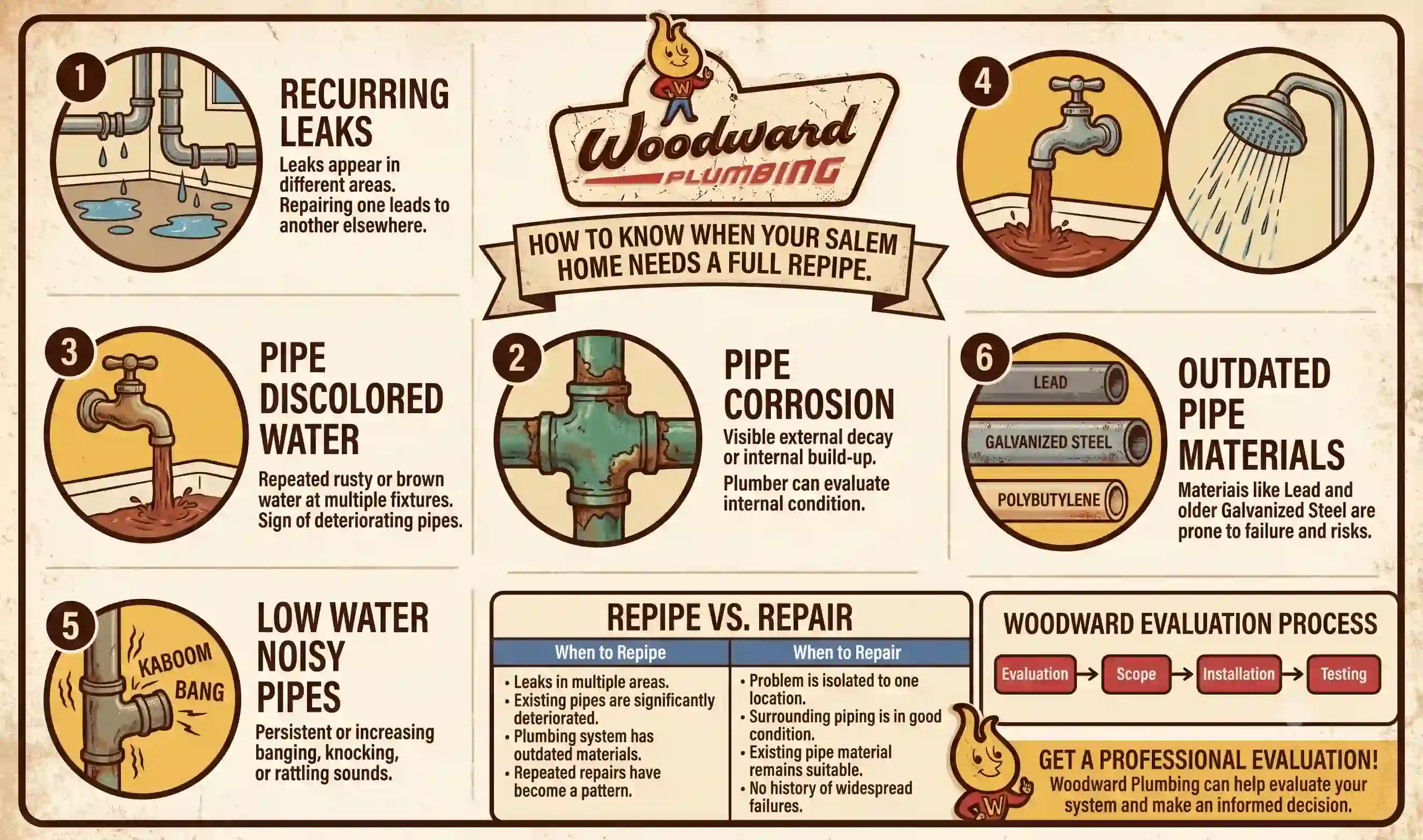
There is rarely one universal symptom that automatically means a house needs a full repipe. Instead, homeowners should look for patterns.
Repeated plumbing problems occurring in different areas of the house can indicate that the underlying piping is deteriorating. The age and material of the pipes also matter, as does the frequency and severity of repairs.
Some of the most important warning signs include recurring leaks, visible corrosion, discolored water, poor water pressure, frequent clogs, noisy pipes, and outdated piping materials.
1. You Keep Repairing Leaks in Different Areas
One of the clearest warning signs is a pattern of recurring leaks.
A single leak does not necessarily mean the entire plumbing system has failed. Pipes can develop isolated problems because of accidental damage, connections, pressure changes, age, or other circumstances.
The situation becomes more concerning when leaks begin appearing throughout the house.
For example, you may repair a leaking pipe beneath the kitchen sink, only to discover another leak near a bathroom a few months later. Then another connection begins leaking near the laundry area.
When plumbing failures keep moving from one part of the home to another, it is worth evaluating the condition of the overall piping system rather than treating each leak as an unrelated event.
Repeated repairs can become frustrating and expensive. More importantly, another weak section of pipe may fail after the latest repair has been completed.
2. Your Pipes Show Signs of Corrosion
Visible corrosion is another reason to have aging plumbing evaluated.
Corrosion can develop on the outside of exposed piping, but deterioration can also occur inside the pipe. Internal corrosion can gradually reduce the usable diameter of a pipe and affect water flow.
Older metal piping may be particularly susceptible to corrosion as it ages.
If you can see corrosion, rust, mineral buildup, or other deterioration around exposed plumbing connections, do not assume the problem is limited to the visible area. A plumber can evaluate whether the condition appears isolated or reflects broader deterioration throughout the system.
Corrosion can also contribute to leaks, restricted water flow, and changes in water quality.
3. Your Water Is Discolored
Discolored water should never be ignored, especially when it happens repeatedly.
Brown, reddish, yellow, or otherwise unusual water can have several possible causes. Disturbances in the water supply, sediment, corrosion, or deteriorating plumbing components can all affect water appearance.
If discoloration consistently occurs at multiple fixtures, the home’s plumbing should be evaluated.
Internal pipe deterioration can release particles into the water supply. In older homes, the type and condition of the existing piping can be especially important when determining the cause.
Discolored water does not automatically mean you need a whole-home repipe. However, it is an important symptom that can justify a professional plumbing inspection.
4. Your Water Pressure Has Changed
Low water pressure can be caused by several different plumbing issues.
A problem with a fixture, shutoff valve, pressure regulator, water service line, or municipal supply can all affect pressure. Mineral buildup inside aging pipes can also restrict the passage available for water.
If pressure has gradually declined throughout your home, the condition of your supply piping should be considered.
Low pressure at a single fixture may point toward a localized issue. Low pressure at multiple fixtures can indicate a larger plumbing problem.
Professional diagnosis can help determine whether the issue is related to the home’s pipes or another component of the plumbing system.
5. Your Plumbing Problems Keep Coming Back
Recurring plumbing problems are often more significant than one isolated failure.
A drain that clogs once may simply have a localized obstruction. A drain that repeatedly clogs despite professional cleaning deserves a closer look. The same principle applies to leaks, water pressure problems, and other recurring issues.
If you continually pay for repairs without getting lasting results, it may be time to step back and evaluate the plumbing system as a whole.
This does not mean every recurring problem requires repiping. Drain issues, for example, may involve buildup, roots, or sewer line damage rather than deteriorating supply pipes. Woodward provides drain cleaning and repair in Salem for these types of problems.
The goal is to identify the actual source instead of assuming that every plumbing problem has the same solution.
6. You Hear Noisy or Unusual Pipes
Pipes can make various sounds as water moves through the plumbing system.
Banging, knocking, rattling, humming, or other unusual sounds can have different causes. Water pressure, loose piping, valves, air in the system, and other plumbing conditions can all contribute to noise.
Occasional sounds are not necessarily evidence of failing pipes. Persistent or increasingly noticeable noises deserve attention, especially when they occur alongside leaks, corrosion, or water pressure changes.
A plumbing inspection can help determine whether the sound is caused by a simple adjustment or a more serious issue with the piping system.
How Pipe Material Affects Repiping Decisions
The material used throughout your plumbing system plays an important role in evaluating its condition.
Different piping materials have different characteristics, expected service lives, and potential failure modes. The age of the home can provide clues about what materials may be present, but a professional inspection provides a more reliable assessment.
Some older plumbing systems may contain materials that homeowners today would prefer to replace as part of a larger plumbing upgrade.
For example, Woodward’s Salem repiping service identifies lead, galvanized steel, and polybutylene as piping materials that can warrant replacement due to their potential risks and performance concerns.
Older galvanized piping can develop internal corrosion and restrictions over time. Polybutylene piping has also been associated with premature failures in residential plumbing systems.
If you are unsure what type of piping is installed in your home, a plumber can help identify the material and evaluate its condition.
Repiping vs. Repairing One Pipe
One of the most important questions homeowners face is whether to repair a specific pipe or replace the home’s plumbing system.
There is no universal answer because the right solution depends on the condition of the existing system.
A localized repair may make sense when:
- The problem is isolated to one location.
- The surrounding piping is in good condition.
- The existing pipe material remains suitable.
- There is no history of widespread plumbing failures.
Whole-home repiping may be worth considering when:
- Leaks are occurring in multiple areas.
- The existing pipes are significantly deteriorated.
- The plumbing system contains outdated or undesirable materials.
- Water pressure has declined throughout the home.
- Corrosion or mineral buildup is widespread.
- Repeated repairs are becoming a pattern.
- The plumbing system is approaching the end of its useful life.
The key is to look at the entire system rather than one isolated symptom.
If the piping surrounding a repaired section is also old and deteriorating, fixing one leak may simply postpone the next failure.
What Happens During a Home Repiping Project?
A professional repiping project begins with an evaluation rather than immediately removing pipes.
The plumber first needs to understand the home’s existing plumbing system, including its layout, pipe materials, accessibility, and condition. This information helps determine the appropriate scope of work.
1. Plumbing Evaluation
The first step is identifying the condition of the existing system.
This may involve examining exposed pipes, checking fixtures, evaluating water pressure, looking for corrosion, and discussing the home’s history of plumbing repairs.
Previous repairs can provide valuable information. A home with several recent pipe repairs may require a different approach from a home experiencing its first plumbing problem in decades.
2. Determining the Scope of Replacement
Once the plumbing system has been evaluated, the plumber can determine which piping needs to be replaced.
Depending on the home’s layout, the project may involve accessible areas such as crawl spaces, basements, utility areas, ceilings, walls, and other locations where supply piping is routed.
Access requirements vary significantly from one property to another.
3. Installing New Piping
The existing piping is removed or isolated as appropriate, and replacement piping is installed according to the planned layout.
Professional installation is important because the new system needs to provide dependable water distribution while maintaining proper connections, routing, and support.
Woodward also provides broader plumbing installation services in Salem, including pipe replacement, water line replacement, fixture installation, and other plumbing projects.
4. Testing the System
After installation, the plumbing system should be tested to identify potential leaks or other issues before the project is considered complete.
Testing helps verify that the new piping is functioning properly and that connections are secure.
Your plumber should also explain any remaining work, access restoration, or maintenance considerations associated with the project.
How Long Does a Whole-Home Repipe Take?
The timeline for repiping varies from house to house.
A small, straightforward property with accessible plumbing may require substantially less time than a larger home with multiple levels, difficult access, or complicated pipe routing.
The existing plumbing layout also affects the project. Homes with crawl spaces or other accessible areas may provide easier access to certain pipes, while plumbing concealed behind finished walls can require additional planning.
Because every house is different, homeowners should be cautious about assuming that a repipe will take a specific number of hours or days without an evaluation.
A professional plumbing contractor can provide a more accurate timeline after assessing the property and determining the project’s scope.
What Factors Affect the Cost of Repiping?
Homeowners often want to know the cost of repiping before scheduling an evaluation. However, there is no single price that applies to every home.
Several factors influence the total project cost.
Home Size
A larger home generally has more plumbing fixtures and more supply piping to replace.
Number of Fixtures
The number of bathrooms, kitchens, laundry connections, and other plumbing fixtures can affect the amount of piping involved.
Pipe Accessibility
Pipes that are easy to access can generally be addressed more efficiently than piping concealed behind finished surfaces.
Existing Pipe Material
The condition and material of the existing system affect removal requirements and replacement planning.
Plumbing Layout
Complex layouts can require additional planning and labor compared with simpler systems.
Extent of Replacement
Some homes may need a complete replacement of supply piping, while others may have a more limited scope based on the condition of the system.
For these reasons, homeowners should focus on getting a clear evaluation and detailed scope rather than relying on a generic online estimate.
Does Repiping Improve Water Pressure?
Repiping can improve water flow when deteriorated or restricted supply piping is contributing to poor pressure.
Over time, corrosion and mineral deposits can reduce the usable interior diameter of some pipes. This can restrict the amount of water moving through the system.
However, low water pressure can have many causes.
A problem with the municipal supply, pressure regulator, shutoff valve, water service line, or another plumbing component can create similar symptoms.
That is why replacing pipes solely because of low pressure is not always the right approach. A professional diagnosis should determine the source first.
Can Repiping Help Prevent Future Water Damage?
Replacing deteriorated piping can reduce the risk associated with known weak sections of a plumbing system.
That does not mean a new plumbing system can never leak. Connections, fixtures, valves, appliances, and other components can still experience problems.
However, replacing aging or deteriorated pipes addresses the underlying condition of the piping instead of repeatedly repairing individual failures.
This can be particularly valuable when a home has experienced multiple leaks over a relatively short period.
Woodward also recommends paying attention to signs of plumbing problems before they become major failures. Regular plumbing maintenance can help identify leaks, corrosion, pressure problems, and other issues earlier.
For additional maintenance guidance, see Woodward’s guide to maintaining your home plumbing system.
When Repiping Is Not the Right Solution
Repiping is not automatically the answer to every plumbing problem.
For example, a single clogged drain does not generally indicate that the home’s water supply pipes need replacement. A damaged sewer lateral is also a different problem from deteriorating interior supply piping.
Woodward provides sewer line repair in Salem for problems involving damaged sewer lines, roots, cracks, offsets, and other sewer-related issues.
Similarly, a damaged underground sewer line may require sewer line replacement rather than a whole-home repipe.
The distinction between supply piping, drain piping, and sewer piping is important.
When you are experiencing recurring plumbing problems, the goal should be to identify the specific system that is failing before choosing a solution.
Why Older Salem Homes May Need Plumbing Upgrades
Older homes can have plumbing systems that have been in service for decades.
Even if the system has worked reliably for most of that time, age eventually becomes a factor. Materials experience wear, connections deteriorate, and previous repairs can create a patchwork of newer and older components.
Salem homeowners should pay attention to the history of the property.
If you recently purchased an older home and do not know what type of plumbing is installed, having the system evaluated can provide useful information before a major failure occurs.
The same applies if you are already dealing with repeated leaks, discolored water, declining water pressure, or frequent plumbing repairs.
Knowing the condition of your plumbing gives you more options than waiting until a pipe fails unexpectedly.
Questions to Ask Before Choosing a Repiping Contractor
Repiping is a significant home improvement project, so homeowners should understand exactly what a contractor is proposing.
Before approving the work, consider asking:
- What type of pipe is currently installed?
- What condition is the existing piping in?
- Does the entire system need replacement?
- Could a localized repair solve the problem?
- Which sections of plumbing will be replaced?
- How will the new piping be routed?
- How will the plumbing system be tested?
- How long is the expected project timeline?
- What areas of the home require access?
- What is included in the project price?
A detailed conversation before work begins can help prevent misunderstandings about the project’s scope.
Repiping Can Be a Long-Term Plumbing Investment
Replacing a home’s plumbing system is not a small decision. For many homeowners, it represents a significant investment in the property.
However, continually repairing deteriorating plumbing can also become costly and inconvenient.
If the same system continues producing leaks, corrosion, pressure problems, and other failures, homeowners may eventually reach the point where replacing the underlying piping makes more sense than continuing with individual repairs.
The biggest advantage of evaluating the system early is that you can make that decision based on information rather than an emergency.
A professional assessment can help determine whether your home needs a complete repipe, a smaller pipe replacement, or simply a targeted plumbing repair.
Common Questions About Home Repiping
How do I know if my house needs a full repipe?
Look for patterns rather than one isolated problem. Multiple leaks, widespread corrosion, recurring plumbing failures, declining water pressure, discolored water, and outdated piping materials can all justify a professional repiping evaluation.
Is repiping better than repairing a leaking pipe?
It depends on the condition of the overall plumbing system. A single isolated leak may only require repair. If leaks continue appearing in different parts of the home, replacing the aging piping may provide a more comprehensive solution.
Does a full repipe replace sewer lines too?
Not necessarily. Whole-home repiping generally refers to replacing interior water supply piping. Sewer lines and underground drain lines are separate systems that may require different repair or replacement services.
Can old pipes cause low water pressure?
They can. Internal corrosion and mineral buildup may restrict water flow inside aging pipes. However, pressure problems can have several causes, so professional diagnosis is important before deciding that repiping is necessary.
Will repiping stop all future plumbing leaks?
Replacing deteriorated supply piping can address failures caused by aging pipes, but no plumbing system is completely immune to leaks. Fixtures, valves, connections, appliances, and other components can still require service.
How much does it cost to repipe a house in Salem?
The cost depends on factors including home size, pipe material, accessibility, number of fixtures, plumbing layout, and the amount of piping being replaced. An on-site evaluation provides a much more accurate estimate than a generic price range.
When Should You Schedule a Repiping Evaluation?
You do not have to wait for a catastrophic plumbing failure to investigate the condition of your home’s pipes.
If you are seeing the same plumbing problems repeatedly, it may be time to look at the system as a whole.
Pay particular attention if your home has:
- Repeated leaks in different locations
- Visible pipe corrosion
- Persistent discoloration in the water
- Declining water pressure
- Frequent plumbing repairs
- Outdated or problematic pipe materials
- Recurring plumbing problems after previous repairs
These symptoms do not automatically mean you need a whole-home repipe. They do, however, provide good reasons to have the plumbing professionally evaluated.
For homeowners who are already dealing with a major water line issue, Woodward also provides water line repair and replacement in Salem.
Get a Professional Opinion Before the Next Pipe Failure
When plumbing problems start appearing throughout your home, another quick repair may not always be the best long-term answer.
Recurring leaks, corrosion, water discoloration, declining pressure, and outdated piping can all indicate that the plumbing system deserves a closer look. Identifying the underlying problem early can give you more time to compare your options and plan for necessary work.
Woodward Heating Air Plumbing provides professional repiping and pipe replacement services for homeowners in Salem and surrounding communities. Our team can evaluate your existing plumbing, identify the source of recurring problems, and help determine whether a localized repair or broader replacement makes sense for your home.
If your Salem home has started experiencing one plumbing problem after another, it may be time to stop treating each issue separately and evaluate the system as a whole.
Learn more about repiping and pipe replacement in Salem, OR to see how Woodward can help you determine the next step for your home’s plumbing.