When a pipe bursts, a water heater leaks, or a hidden plumbing leak damages walls or flooring, one of the first questions homeowners ask is simple: does homeowners insurance cover plumbing? The answer depends on what happened, how suddenly it happened, what caused the damage, and what your specific policy says.
In most cases, homeowners insurance is more likely to cover sudden and accidental water damage from plumbing than the actual plumbing repair itself. That means your policy may help with damaged drywall, flooring, cabinets, or personal belongings after a covered leak, but it may not pay to replace the broken pipe, failed fixture, water heater, or appliance that caused the problem.
This guide explains how home insurance plumbing coverage usually works, when plumbing leaks may be covered, when claims are commonly denied, what Oregon homeowners should know, and how to reduce the risk of water damage before it becomes a major problem.
Does Homeowners Insurance Cover Plumbing Leaks?
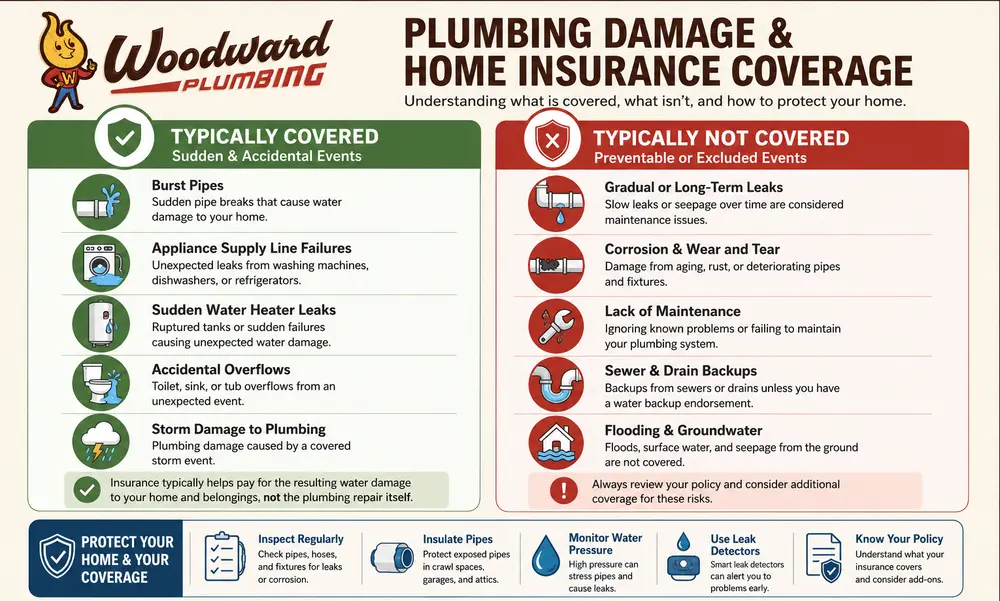
Homeowners insurance may cover plumbing leaks when the damage is sudden, accidental, and not caused by neglect. A burst pipe, sudden supply line failure, ruptured appliance hose, or unexpected water heater leak may qualify for coverage if the event was not gradual or preventable.
For example, if a pipe suddenly bursts behind a wall and damages flooring, drywall, trim, or cabinets, your insurance policy may help pay for the resulting water damage. However, the cost to repair or replace the failed pipe itself may still be your responsibility.
This distinction is important. Insurance usually focuses on the damage caused by the plumbing problem, not the plumbing problem itself. A plumber repairs the source of the leak. A restoration contractor repairs the water-damaged building materials. Your insurer decides which parts of that loss fall under your policy.
For broader context, Progressive explains that homeowners insurance may apply when plumbing damage is sudden and accidental. Allstate also notes that covered water damage often depends on whether the issue was unexpected rather than gradual.
What Plumbing Damage Is Usually Covered?
While every policy is different, homeowners insurance often covers water damage caused by plumbing problems like:
- Burst pipes
- Sudden frozen pipe failures
- Accidental appliance supply line leaks
- Sudden toilet, sink, or tub overflows
- Unexpected water heater tank ruptures
- Hidden leaks that could not reasonably be discovered sooner
If a covered event damages your walls, ceiling, flooring, cabinets, insulation, or personal belongings, your policy may help pay for restoration. Coverage may also apply if your home becomes temporarily unlivable and your policy includes loss-of-use protection.
For Salem and Willamette Valley homes, sudden pipe failures can happen during cold snaps, especially in crawl spaces, garages, exterior walls, and older homes with limited insulation. If you notice sudden water pressure changes, wet flooring, ceiling stains, or water sounds inside the walls, scheduling leak detection services in Salem can help identify the source quickly.
What Plumbing Damage Is Usually Not Covered?
Homeowners insurance usually does not cover plumbing damage caused by slow leaks, neglect, poor maintenance, old materials, corrosion, or known problems that were ignored. These issues are generally considered maintenance responsibilities rather than sudden accidents.
Common exclusions may include:
- Slow leaks that developed over weeks or months
- Damage from corrosion or pipe deterioration
- Leaks from old galvanized, polybutylene, CPVC, or failing pipe materials
- Water damage caused by a leak you knew about but did not repair
- Flooding from outside the home
- Sewer or drain backups without a water backup endorsement
- Damage from frozen pipes if the home was not heated or winterized
The Oregon Division of Financial Regulation notes that many homeowners policies exclude flood damage, sewer or drain backups, and below-ground water intrusion unless additional coverage applies. Oregon homeowners can review state-level insurance guidance through the Oregon Division of Financial Regulation.
If your home has recurring leaks, water stains, aging pipes, or repeated pressure issues, it may be time to review the warning signs in Woodward Plumbing’s guide on when your home needs a full repipe.
Does Homeowners Insurance Cover Plumbing Repairs?
In many cases, homeowners insurance does not cover the plumbing repair itself. It may cover water damage caused by a covered plumbing failure, but not the replacement of the failed pipe, valve, fixture, hose, or water heater component.
For example, if a pipe bursts and damages your living room floor, the insurer may help pay for flooring and drywall restoration. The actual pipe repair may be an out-of-pocket plumbing expense. If a water heater tank suddenly ruptures and damages nearby flooring, your policy may help with the water damage, but not necessarily the new water heater.
This is why homeowners should separate the issue into two parts:
- Source repair: fixing the pipe, water line, fixture, drain, or appliance that failed.
- Resulting damage: repairing the walls, floors, cabinets, insulation, or belongings damaged by water.
If the damaged line is underground or connected to your main water supply, Woodward Plumbing’s water line repair and replacement services in Salem can help determine whether repair or replacement is the better long-term option.
Does Homeowners Insurance Cover Water Damage From Leaking Plumbing?
Homeowners insurance may cover water damage from leaking plumbing when the leak was sudden, accidental, and not caused by long-term neglect. The key question is usually not “Was there water damage?” but “Why did the water damage happen?”
A sudden leak from a broken pipe may be covered. A slow leak under a sink that was visible for months may not be. A hidden pipe leak behind a wall may fall into a gray area, depending on whether there were earlier warning signs and how quickly the homeowner responded after discovering the issue.
Signs that water damage may be related to hidden leaking plumbing include:
- Musty odors
- Soft or warped flooring
- Peeling paint or bubbling drywall
- Ceiling stains
- Unexpected high water bills
- Low water pressure
- Water sounds when fixtures are off
For more early warning signs, see Woodward Plumbing’s guide to hidden pipe leaks inside your home.
Common Plumbing Insurance Scenarios
Burst Pipe
A burst pipe is one of the most common plumbing events that may be covered by homeowners insurance. If the pipe failed suddenly and caused immediate water damage, the resulting damage may be covered. However, the policy may not pay to replace the pipe itself unless the pipe was damaged by another covered event.
Frozen Pipe
Frozen pipe damage may be covered if the homeowner took reasonable steps to heat and maintain the home. If the home was vacant, unheated, or not winterized, the claim may be denied. This matters in Oregon homes with crawl spaces, exterior wall plumbing, and older insulation.
Water Heater Leak
If a water heater suddenly ruptures and causes water damage, your insurance may help with the resulting damage. It may not cover the water heater replacement. If you are deciding whether repair or replacement makes sense, review Woodward Plumbing’s guide on water heater repair vs. replacement in Salem.
Slow Leak Under a Sink
A slow leak under a sink is often not covered if it was visible, ongoing, or caused by a neglected fixture. Homeowners are expected to repair minor leaks before they cause damage.
Sewer Backup
Sewer backups are usually not covered under a standard homeowners policy unless you have a water backup endorsement. If you notice gurgling drains, sewage smells, frequent clogs, or wet areas near sewer lines, Woodward Plumbing’s article on signs of sewer line problems in Salem explains what to watch for.
Slab Leak
Slab leaks can be complicated. Insurance may cover access and water damage if the leak was sudden and accidental, but it may not cover pipe replacement if the leak came from age, corrosion, or soil movement. Learn more in Woodward Plumbing’s guide on recognizing slab leaks in Oregon houses.
Why Insurance Companies Deny Plumbing Claims
Many denied plumbing claims come down to maintenance, timing, or documentation. The insurer may argue that the damage was preventable, gradual, or caused by an excluded issue.
Common reasons plumbing claims are denied include:
- The leak was ongoing for a long time.
- The homeowner ignored visible signs of damage.
- The pipe failed because of corrosion or age.
- The home was vacant or not heated during freezing weather.
- The damage came from sewer backup without added coverage.
- The damage came from outside flooding or groundwater.
- The homeowner did not document the damage clearly.
This is why quick action matters. Shut off the water, document the damage, call a plumber, and notify your insurance company. The faster you stop the source and preserve evidence, the easier it is to show that you responded responsibly.
What To Do If You Find a Plumbing Leak
If you discover leaking plumbing or sudden water damage, take these steps:
1. Shut Off the Water
Turn off the fixture shutoff valve if the leak is isolated. If water is spreading quickly or you cannot find the source, shut off the main water valve.
2. Protect the Area
Move furniture, electronics, rugs, boxes, and valuables out of wet areas. Use towels, buckets, or a wet/dry vacuum if it is safe to do so.
3. Take Photos and Videos
Document the water source, damaged materials, standing water, stained drywall, wet flooring, and damaged belongings. Take photos before cleanup if possible.
4. Call a Plumber
A licensed plumber can locate the source, stop the leak, and provide documentation of what failed. This may be useful for your claim, even if the plumbing repair itself is not covered.
5. Contact Your Insurance Company
Notify your insurer quickly. Ask what documentation they need and whether an adjuster should inspect the damage before major restoration begins.
6. Keep Receipts
Save invoices from plumbers, restoration contractors, cleanup supplies, hotel stays, and temporary repairs. Your policy may reimburse certain expenses if the loss is covered.
How Oregon Homes Increase Plumbing Risk
Oregon homes face several plumbing conditions that can influence leak risk and insurance claims. These local factors do not automatically determine coverage, but they can affect how and why plumbing problems develop.
Seasonal Rain and Moisture
Western Oregon’s long rainy season can keep soil wet around foundations and underground lines. Saturated soil, poor drainage, and older sewer lines can contribute to moisture problems, backups, and pipe stress.
Occasional Freezing Weather
Salem and surrounding areas do not experience extreme winter conditions every year, but cold snaps can still freeze pipes in crawl spaces, garages, exterior walls, and unheated areas.
Older Plumbing Materials
Older Oregon homes may still have galvanized steel, polybutylene, aging CPVC, or outdated pipe sections. These materials may be more likely to corrode, crack, or leak over time. Woodward Plumbing’s article on CPVC repipe warning signs explains what homeowners should watch for.
Water Quality and Mineral Buildup
Mineral content, sediment, and water quality concerns can affect fixtures, water heaters, and supply lines over time. For homes comparing treatment options, Woodward Plumbing’s water softener vs. whole-house filter guide explains the difference.
How To Reduce the Risk of Plumbing Insurance Claims
Preventing plumbing damage is often easier and less expensive than dealing with an insurance claim. A few practical habits can reduce the chance of leaks and improve your documentation if you ever need to file a claim.
- Know where your main water shutoff valve is located.
- Check under sinks regularly.
- Replace old washing machine hoses.
- Insulate exposed pipes before freezing weather.
- Watch for water stains, musty smells, and soft flooring.
- Repair small leaks quickly.
- Monitor water pressure.
- Avoid harsh chemical drain cleaners.
- Schedule inspections for older plumbing systems.
- Keep invoices and maintenance records.
High water pressure can make leaks more likely by stressing pipes, valves, fixtures, and appliance connections. Woodward Plumbing’s article on water pressure solutions plumbers wish homeowners would not do explains why pressure issues should be handled carefully.
If recurring clogs, sewer smells, or backups are part of the problem, the issue may be deeper in the drain or sewer system. Woodward Plumbing’s article on when rooter service is needed can help homeowners understand when drain cleaning is not enough.
Should You File a Plumbing Insurance Claim?
Before filing a claim, compare the expected repair cost to your deductible and consider whether the claim may affect future premiums. If the damage is minor and the repair cost is close to your deductible, paying out of pocket may make more sense.
You may be more likely to file a claim when:
- Water damage is extensive.
- Multiple rooms are affected.
- Flooring, drywall, cabinets, or ceilings need replacement.
- Your home is temporarily unlivable.
- Personal belongings were damaged.
- The event was sudden and well documented.
You may want to speak with your insurance agent first when:
- The damage is small.
- The repair cost is near your deductible.
- The leak may have been gradual.
- You are unsure whether the event is covered.
A plumber cannot determine insurance coverage, but they can help identify the cause of the leak and provide documentation that may support your claim.
Frequently Asked Questions
Does homeowners insurance cover plumbing leaks?
Homeowners insurance may cover plumbing leaks when the leak is sudden and accidental. Slow leaks, neglected leaks, and leaks caused by corrosion or long-term wear are usually not covered.
Does homeowners insurance cover plumbing repairs?
Usually, no. Insurance may cover water damage caused by a covered plumbing event, but the cost to repair the pipe, valve, fixture, or appliance that failed is often the homeowner’s responsibility.
Does homeowners insurance cover water damage from leaking plumbing?
Yes, if the water damage came from a sudden and accidental leak. If the damage developed over time or could have been prevented with maintenance, the claim may be denied.
Is plumbing covered by home insurance if a pipe bursts?
The resulting water damage may be covered if the pipe burst suddenly and the home was properly maintained. The pipe repair itself may not be covered unless the pipe was damaged by a covered event.
Does homeowners insurance cover slow leaks?
Slow leaks are commonly excluded because they are considered maintenance issues. If a leak was visible or should have been discovered sooner, the insurer may deny the claim.
Does homeowners insurance cover frozen pipes?
Frozen pipe damage may be covered if you took reasonable precautions, such as keeping the home heated and protecting exposed pipes. If the home was left unheated or vacant, coverage may be denied.
Does homeowners insurance cover sewer backups?
Standard homeowners insurance usually does not cover sewer backups unless you have added water backup coverage. This endorsement can be important for homes with older sewer lines or recurring drain issues.
Does homeowners insurance cover slab leaks?
It depends on the cause. A sudden pipe failure under the slab may have some coverage for access and water damage, but corrosion, age, or long-term deterioration may be excluded.
What should I document after a plumbing leak?
Take photos and videos of the leak source, damaged materials, standing water, wet flooring, damaged belongings, and temporary repairs. Save plumber invoices, restoration estimates, and communication with your insurance company.
Can a plumber help with an insurance claim?
A plumber can identify the source of the leak, stop the water, repair the plumbing issue, and provide written documentation. Your insurance company decides coverage, but plumbing documentation can help clarify what happened.
Final Thoughts: Home Insurance Covers Some Plumbing Damage, Not Every Plumbing Problem
Homeowners insurance can help protect your home after sudden plumbing water damage, but it is not a replacement for regular plumbing maintenance. In most cases, coverage depends on whether the event was sudden, accidental, and properly documented.
For Oregon homeowners, the best approach is prevention. Know the age and condition of your plumbing system, watch for early leak signs, protect pipes during cold weather, and address small problems quickly. If you suspect a hidden leak, water line issue, or plumbing failure in the Salem area, Woodward Plumbing can help locate the source and explain your repair options clearly.