Where Is the Blockage?
Mill City’s wastewater setup makes this question more important than simply asking which drain appears clogged.
Localized Fixture Clog
One sink, shower, or bathtub that drains slowly while the rest of the plumbing works normally often points toward a restriction close to that fixture.
Common causes include:
- Hair
- Soap residue
- Food particles
- Cooking grease
- Personal-care products
- Foreign objects
These are ordinary plumbing clogs that occur before wastewater approaches the property’s interceptor tank.
Shared Branch Drain Blockage
Several fixtures can connect to a common drain.
A bathroom sink and shower becoming slow together may indicate that the restriction is farther along the shared branch instead of directly beneath one fixture.
Building Drain Problem
A deeper restriction can affect several parts of the property.
Possible symptoms include:
- Several slow drains
- A toilet gurgling while another fixture drains
- Wastewater rising through a tub or shower
- A floor drain backing up
- Repeated whole-building drainage problems
Woodward’s guide to why toilets gurgle during drain problems explains why that symptom can help locate a deeper restriction.
Interceptor-Tank Connection Problem
Mill City specifically warns that grease or another obstruction can occur where the building drain connects with the interceptor tank.
This may create broader drainage symptoms than a single sink clog.
Because Mill City Public Works maintains or assists with much of the interceptor-tank system, the City’s current guidance is to call Public Works first for a sewer backup or slow sewer line so staff can determine which side of the system needs attention.
What Do Your Symptoms Suggest?
| What You Notice |
What May Need Investigation |
| One bathroom sink drains slowly |
Fixture drain or nearby branch |
| Kitchen sink repeatedly clogs |
Grease or food buildup in the kitchen drain |
| Two nearby fixtures are slow |
Shared branch drain |
| Several fixtures are backing up |
Building drain or interceptor connection may need evaluation |
| Toilet gurgles when another fixture drains |
Wastewater flow farther downstream should be checked |
| Sewer line drains slowly or whole-property backup occurs |
Mill City advises contacting Public Works first to evaluate the interceptor system |
These patterns help narrow down the problem, but the plumbing should still be evaluated before deciding how to clear it.
Common Causes of Drain Clogs in Mill City
Cooking Grease and Food Waste
Kitchen drain blockages commonly develop as grease coats the inside of drain piping.
Food particles, soap, and other material can stick to that layer and progressively reduce the opening available for wastewater.
Mill City specifically tells residents to place used cooking grease and food scraps in the trash or compost rather than sending them into the wastewater system.
Hair and Soap Residue
Hair can catch soap residue and grooming products inside sinks, showers, and tubs.
The drain may become slightly slower at first before eventually holding standing water.
Wipes and Other Non-Flushable Materials
Mill City’s wastewater guidance specifically tells residents to keep items such as disposable wipes, including products labeled “flushable,” out of the wastewater system.
Other listed problem materials include:
- Paper towels
- Disposable diapers
- Sanitary products
- Rags
- Coffee grounds
- Kitty litter
- Food scraps
These materials can create plumbing blockages before they reach the interceptor tank and can also create problems farther through the wastewater system.
Root Intrusion in Buried Drain Piping
Tree roots can enter buried piping through an existing crack, separated connection, or other opening.
Once roots enter the line, they can catch paper, grease, wipes, and other material and contribute to recurring blockages.
Clearing roots can restore wastewater flow, but repeated intrusion may justify camera inspection to determine whether the piping itself has an underlying defect.
Homeowners experiencing repeated backups can review why sewer and main drain problems keep returning.
Our Drain Cleaning Process
Step 1: Identify Which Part of the Plumbing Is Affected
Woodward begins with the pattern of symptoms.
Our plumber may consider:
- Which drain became slow first
- Whether one or multiple fixtures are affected
- Whether toilets or drains are gurgling
- Whether wastewater appears through a low fixture
- Whether the same problem has happened before
- Whether an accessible drain or cleanout is available
- Whether Mill City Public Works has already inspected the interceptor tank or sewer connection
For a whole-property sewer backup, contacting the City first can help establish whether the problem is at the interceptor system or within the homeowner’s plumbing.
Step 2: Match the Cleaning Method to the Blockage
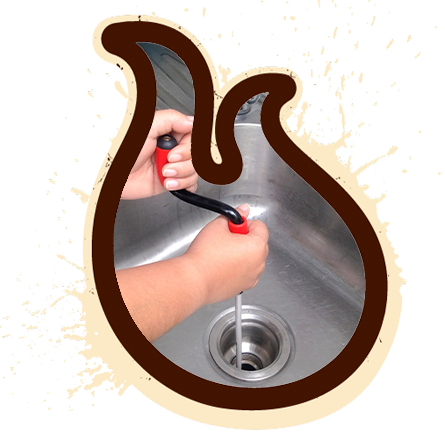
Mechanical drain-clearing equipment can remove many ordinary clogs involving hair, food debris, wipes, or other material.
Rooter equipment may be appropriate for more difficult restrictions. Woodward explains how professional rooter service works and when this type of mechanical cleaning may be useful.
Hydro jetting provides a different cleaning method.
High-pressure water can remove heavy grease, sludge, and buildup from suitable piping. Woodward’s guide to hydro jet drain cleaning in Oregon explains when this service may be worthwhile.
Mill City’s interceptor-tank configuration should be considered before deeper or more aggressive cleaning work is performed.
Step 3: Restore Flow and Explain What We Found
After clearing a homeowner-side drain blockage, Woodward tests the affected plumbing to confirm that wastewater is moving properly again.
Our plumber can explain:
- What likely caused the clog
- Where the restriction appeared to be located
- Whether the problem seems likely to return
- Whether camera inspection would provide useful information
- Whether Mill City Public Works should be involved
- What habits can reduce another blockage
The work area is cleaned before service is completed.
When Is Camera Inspection Useful?
A simple hair clog generally does not require a sewer camera.
Camera inspection becomes more valuable when:
- A blockage repeatedly returns
- Several fixtures are affected
- Public Works has ruled out the interceptor tank as the cause
- Root intrusion is suspected
- A buried drain pipe may be damaged
- Previous cleaning has provided only temporary relief
- The exact location of a deeper obstruction remains unclear
A camera can help identify visible buildup, roots, foreign objects, separated joints, cracks, or other conditions inside accessible piping.
It is not a substitute for inspecting or servicing the interceptor tank itself.
Rooter Service, Hydro Jetting, and Tank Maintenance Are Different Services
Mill City’s wastewater system makes this distinction especially important.
Rooter service uses mechanical drain-cleaning equipment to break apart or remove certain obstructions.
Hydro jetting uses high-pressure water to remove extensive grease, sludge, and buildup from suitable pipes.
Camera inspection helps evaluate recurring problems inside accessible drain piping.
Interceptor-tank maintenance concerns the tank that forms part of Mill City’s public wastewater system and should be handled according to City procedures.
Cleaning a bathroom drain does not pump an interceptor tank.
Tank maintenance does not necessarily remove a clog from a kitchen branch line.
The location of the problem determines the correct service.
Why Mill City Says to Call the City First for Sewer Backups
Mill City’s homeowner guidance explains that a sewer backup or slow sewer line is commonly caused by a blockage where the building drain enters the interceptor tank.
Public Works can inspect that area and determine whether the problem belongs to the City’s portion of the system or the homeowner’s plumbing.
If the City determines that the homeowner side is responsible, its guidance specifically notes that a plumber or sewer rooter may be needed.
That process can save time by identifying the responsible part of the wastewater system before cleaning work begins.
What if Only My Kitchen Sink Is Clogged?
A localized fixture clog is different from a whole-property sewer backup.
One kitchen sink draining slowly while bathrooms, toilets, and other fixtures work normally commonly points toward buildup within the kitchen drain or branch piping.
Professional drain cleaning can address:
- Grease buildup
- Food particles
- Soap residue
- Foreign material
- Other localized restrictions
City involvement generally becomes more relevant when the symptoms point toward the sewer line or interceptor-tank connection rather than one isolated fixture.
What if the Interceptor-Tank Alarm Activates?
Mill City tells customers to take immediate action when an alarm activates on the wastewater system.
An alarm should not be treated as proof that a sink or shower drain needs cleaning.
Pump, tank, electrical, float, or other wastewater-system conditions can produce symptoms that require City attention rather than ordinary drain-clearing equipment.
Do not turn off the main circuit breaker serving the wastewater pumps simply to silence or reset the system.
Mill City’s New Wastewater Facility Is Changing the Regional System
Mill City and Gates are in the middle of a major wastewater infrastructure transition.
The new Mill City-Gates Water Pollution Control Facility is intended to replace Mill City’s existing treatment facility and provide treatment capacity for both communities.
Current City planning calls for the new plant to begin operating in January 2027.
That project changes the regional treatment infrastructure farther downstream. It does not eliminate household drain clogs.
Kitchen grease, hair, wipes, food particles, and other materials can still block a fixture or building drain regardless of which treatment facility ultimately receives the wastewater.
What Can Mill City Residents Check Before Calling?
Useful observations include:
- Which fixture became slow first
- Whether one or several drains are affected
- Whether a toilet gurgles when another fixture drains
- Whether wastewater appears through a tub, shower, or floor drain
- Whether the same blockage has happened before
- Whether the wastewater-system alarm is active
- Whether Mill City Public Works has already evaluated the interceptor tank
Avoid repeatedly pouring harsh chemical drain cleaners into the plumbing.
Chemical cleaners may not remove the complete obstruction, cannot repair damaged piping or tank equipment, and can create hazards when a plumber later needs to work on the line.
What Affects Drain Cleaning Cost in Mill City?
Drain-cleaning pricing depends on the type and location of the problem.
Factors can include:
- Whether one or several fixtures are affected
- How far downstream the blockage is located
- The material causing the clog
- Drain and cleanout access
- The equipment required
- Whether rooter service is needed
- Whether camera inspection is appropriate
- Whether hydro jetting can be safely used
- Root intrusion or pipe damage
- Whether the problem involves City-maintained wastewater equipment rather than homeowner plumbing
Woodward Plumbing offers financing options for larger plumbing repairs, system upgrades, and new installations. If cost is a concern, review our plumbing financing options or ask our team about available options before work begins.
Residential and Commercial Drain Cleaning
Woodward provides professional drain cleaning for homes and businesses in Mill City.
Residential service may involve:
- Kitchen sinks
- Bathroom sinks
- Showers and tubs
- Floor drains
- Branch drains
- Building-drain blockages
Commercial properties may experience additional buildup from high-use fixtures, kitchens, restrooms, food debris, grease, and floor drains.
The same Mill City wastewater-system distinction still applies: determine whether the blockage is in private plumbing or at the interceptor system before choosing the service.
Same-Day and Weekday Emergency Drain Service
A slowly draining fixture can often be addressed before it becomes completely blocked.
More urgent symptoms include sewage entering the building, several fixtures suddenly backing up, a floor drain overflowing, or wastewater threatening flooring and cabinets.
Same-day repairs are available Monday through Friday, and weekday emergency plumbing service is available Monday through Friday when scheduling allows.
For a Mill City sewer backup or slow sewer line involving the interceptor system, follow the City’s guidance and contact Public Works first.
How to Reduce Repeat Drain Problems
Mill City’s own wastewater guidance supports several useful habits:
- Keep used cooking grease out of sinks.
- Place food scraps in the trash or compost.
- Do not flush disposable or “flushable” wipes.
- Keep paper towels, diapers, sanitary products, rags, coffee grounds, and kitty litter out of the wastewater system.
- Use drain strainers to catch hair and solid debris.
- Address repeatedly slow fixture drains before they become completely blocked.
- Investigate recurring homeowner-side clogs rather than repeatedly treating the symptom.
- Respond promptly to wastewater-system alarms.
Woodward’s home plumbing maintenance recommendations provide additional guidance for protecting drains, fixtures, piping, and other components throughout the property.
Why Mill City Property Owners Call Woodward Plumbing
- Serving Oregon homeowners since 1989, bringing decades of experience to clogged drains and other plumbing problems.
- Oregon License #153836, providing service from a licensed Oregon plumbing contractor.
- Diagnosis before recommendations, especially important in Mill City’s modified STEP/STEG wastewater system.
- Multiple drain-cleaning options, including mechanical clearing, rooter service, camera inspection, and hydro jetting when appropriate.
- Clear distinction between plumbing and wastewater-system problems, helping avoid treating an interceptor-tank issue as an ordinary drain clog.
- Residential and commercial service, covering kitchens, bathrooms, floor drains, branch drains, and deeper plumbing blockages.
- Same-day repairs available Monday through Friday, with weekday emergency plumbing service available when scheduling allows.
- Member of the Salem Chamber of Commerce, reflecting Woodward’s long-standing involvement in Oregon communities.