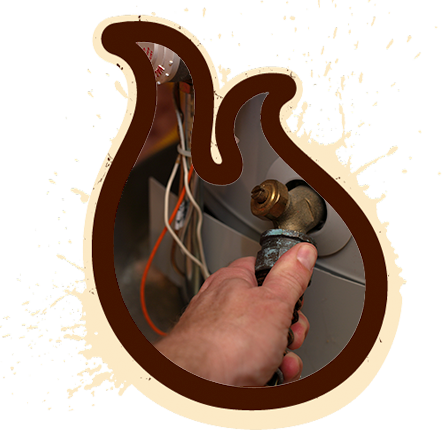
How Woodward Diagnoses Water Softener Problems
A softener problem can involve water quality, plumbing, programming, the brine system, the mineral tank, or the control valve. Replacing random parts before confirming the cause can add cost without restoring performance.
Step 1: Test the System and Confirm the Complaint
We start with what changed.
That may include hardness returning, unusual salt use, regeneration problems, standing brine water, pressure changes, leaks, or an error code.
The evaluation may include:
- Untreated and treated water testing
- Reviewing programmed settings
- Checking the bypass valve
- Examining salt and brine conditions
- Testing regeneration behavior
- Checking brine draw
- Inspecting tubing and drain connections
- Looking for valve or plumbing leaks
Understanding both the water and the equipment helps avoid treating the wrong problem.
Step 2: Explain What Failed and What the Options Are
Woodward explains what appears to be causing the performance problem and what makes sense next.
A minor maintenance issue may need cleaning or adjustment.
A worn valve component may need repair.
A system with extensive wear, unavailable parts, exhausted resin, or poor sizing may justify a replacement discussion.
The recommendation depends on the actual condition rather than the age of the equipment alone.
Step 3: Complete the Service and Confirm Operation
After maintenance or repair, the system is returned to service and checked for normal operation.
That can include confirming regeneration behavior, checking for leaks, reviewing settings, and verifying that the equipment is no longer showing the symptoms that triggered the service call.
Repair the Softener or Replace It?
Many softener problems are repairable.
Repair may make sense when:
- The system is otherwise in good condition
- The problem is limited to a valve, injector, brine line, float, seal, motor, or programming issue
- The resin still performs adequately
- Replacement parts remain available
- The system is properly sized for the home
Replacement may deserve consideration when:
- Major failures keep returning
- Both the valve and resin require significant work
- The equipment is badly undersized for household demand
- Important parts are no longer available
- The water source or treatment goal has changed
- The original equipment is not appropriate for the water problem
Homeowners who reach that point can compare current water softener system options in Salem rather than continuing to invest in equipment that no longer makes practical sense to repair.
What Affects Water Softener Repair Cost?
There is no single maintenance or repair price that applies to every system.
Cost can depend on:
- The problem being diagnosed
- Equipment age and condition
- Control-valve design
- Replacement-part availability
- Resin condition
- Accessibility around the equipment
- Water testing needs
- Whether plumbing connections also require repair
- Whether cleaning, adjustment, repair, or replacement is appropriate
Cleaning a restricted injector is a very different repair from rebuilding a control valve or replacing a failing mineral tank.
Woodward Plumbing offers financing options for larger plumbing repairs, system upgrades, and new installations. If cost is a concern, ask our team about available options before work begins.
What Homeowners Can Safely Check First
A few observations can make a service visit more useful.
Homeowners can safely note:
- How much salt is currently in the tank
- Whether a hollow salt bridge appears to be present
- How high the water sits in the brine tank
- Whether the unit is accidentally in bypass
- Any error message on the control panel
- How often regeneration appears to occur
- Whether the issue affects the whole house
- Visible water around the equipment
Avoid disassembling a control valve, changing programming repeatedly, forcing repeated regeneration cycles, modifying pressurized plumbing, or adding cleaning chemicals that are not approved for the equipment.
A few basic checks can help describe the problem, but repairs involving pressurized piping, internal valves, drainage, electrical components, or system disassembly should be handled by a qualified professional.
Preventing Repeat Water Softener Problems
The best maintenance routine is based on the individual system rather than a rigid universal schedule.
Helpful habits include:
- Learning the system’s normal salt consumption
- Watching for sudden changes in regeneration frequency
- Checking periodically for leaks
- Keeping the brine tank free of major salt bridges and sludge
- Using salt appropriate for the equipment
- Keeping drain and brine lines unobstructed
- Testing hardness when water performance changes
- Following manufacturer-specific maintenance recommendations
Broader household plumbing inspections can also be incorporated into professional plumbing maintenance in Salem when homeowners want to monitor more than the treatment equipment alone.
Why Salem Homeowners Call Woodward Plumbing
- Serving Oregon homeowners since 1989, providing decades of experience with plumbing repairs, water treatment, and system maintenance.
- Oregon License #153836, giving homeowners a licensed plumbing team for repairs involving treatment equipment and connected plumbing.
- Straightforward diagnosis, so a maintenance problem is not automatically turned into an unnecessary replacement.
- Water-quality and plumbing experience, allowing us to look beyond the softener when the actual problem involves filtration, pressure, piping, or the water source.
- Same-day availability during the workweek, with same-day repairs available Monday through Friday and weekday emergency plumbing service available Monday through Friday when scheduling allows.
- Financing options for larger projects, including qualifying system upgrades and replacements.
Water Softener Maintenance & Repair FAQs
How often should a water softener be professionally serviced?
There is no single service interval that fits every system. Water hardness, water use, equipment design, age, salt consumption, and manufacturer recommendations all affect maintenance needs. An annual system review can be useful for many households, while unusual operation should be diagnosed sooner.
How do I know whether my water softener needs repair?
Hardness returning, salt not being consumed, excessive salt use, abnormal regeneration, standing water in the brine tank, continuous drain flow, error codes, pressure loss, and leaks can all justify professional diagnosis.
Why is my water softener full of water?
Some brine-tank water is normal in many systems. Water that rises unusually high, approaches the overflow, or never draws down can indicate a restriction, brine-line problem, float issue, injector problem, valve malfunction, or incorrect programming.
Why isn’t my water softener using salt?
A salt bridge is one possible cause, but it is not the only one. Problems with brine draw, the control valve, injector, tubing, programming, or regeneration can also prevent the system from using salt correctly.
Can you repair a water softener instead of replacing it?
Often, yes. Valve components, brine-system parts, programming issues, injectors, seals, tubing, and other individual problems may be repairable. Replacement becomes more reasonable when failures are extensive, parts are unavailable, or the equipment no longer suits the home’s water conditions.
Does Salem city water need a water softener?
Not automatically. Salem’s municipal supply is surface water from the North Santiam watershed and is naturally relatively low in many hardness minerals. Homes on private wells or properties with specific tested water conditions can have very different treatment needs.
Is a water softener the same as a whole-house water filter?
No. A traditional softener primarily reduces hardness minerals such as calcium and magnesium. Filtration systems can target different concerns such as sediment, chlorine taste and odor, or other water-quality issues.
Can low water pressure be caused by a water softener?
It can be, particularly if there is an internal restriction or valve problem, but many other plumbing conditions can reduce pressure. Diagnosis should confirm where the restriction is before the softener is repaired or replaced.
How much does water softener repair cost?
Pricing depends on the actual failure, equipment design, system age, parts availability, accessibility, and whether the issue requires cleaning, adjustment, component repair, resin work, or replacement. Woodward explains the repair scope before larger work begins.
Do you offer financing for water softener replacement?
Yes. Woodward Plumbing offers financing options for larger plumbing repairs, system upgrades, and new installations. Financing may be useful if diagnosis shows that replacing an aging or poorly matched softener makes more sense than continued repair.
Can Woodward provide same-day water softener repair?
Same-day repairs are available Monday through Friday, and weekday emergency plumbing service is available Monday through Friday when scheduling allows. Availability depends on the schedule and the repair required.
Do you maintain water softeners outside Salem?
Woodward serves Salem and communities throughout the surrounding Oregon service area. Our team can confirm availability for your location when you schedule service.
Schedule Water Softener Service in Salem, OR
A water softener that suddenly stops using salt, regenerates constantly, loses pressure, leaks, or allows hard water back into the home deserves diagnosis before replacement is assumed.
Woodward Plumbing can evaluate the water, equipment, and connected plumbing to determine whether maintenance, repair, adjustment, or replacement is the right next step.
Call 503-994-8280 to speak with our team, or submit a service request online.
Request Water Softener Maintenance or Repair
Explore additional plumbing services in Salem, OR.